

Full disclosure: In all my travels, I’ve only been to a handful of galleries. And I don’t know anything about art except I like what I like. I might not ‘get’ a lot of art but I always assumed one thing when it came to famous art pieces. In each case, the artist was so good that he or she nailed it on the first try. Turns out I was completely wrong about that one. Take a look at van Gogh’s most famous piece – The Starry Night.

Now ol’ Vinnie really challenged himself when he attempted the Starry Night. He really wanted to get the stars and light to flicker and dance. He ended up making some 21 variations under different light and weather conditions. Apparently, he wasn’t satisfied with any of them but the one we’ve come to know was the best of the bunch.
Which really makes me wonder if he would have been a scale modeler in another life.
Anyway, I’ll set aside the discussion as to whether a scale model is ‘art’ for another piece down the road. The important takeaway is that all of the great artists practiced by sketching and by making other smaller or lesser paintings to test techniques and composition before committing to the final canvas. There’s a lot to learn from this approach of practicing before committing.
But How to Practice?
I’m always telling everyone to keep building and to take risks to get better results and build skills. But maybe I should add the concept of ‘practice’ in there, somewhere. Because it takes guts to try something new on a $100 model. Especially as you are approaching the finish line. But trying something new is definitely less risky if you can work on it some before committing it to your latest build.
Now, I know what you are thinking. “Chris, if I am going to chisel out an hour to get some bench time, I am going to spend it moving the ball down the field! Why would I waste that hour tinkering when I can get closer to finishing my build?” This is a valid point – time being a valuable resource, and all that. But, that one hour invested can really pay dividends; sometimes right away. A round or two of practice might even get you the confidence to try something new and get over the hump on that stalled build.
There are various ways to do this:
Experiments on Testbeds

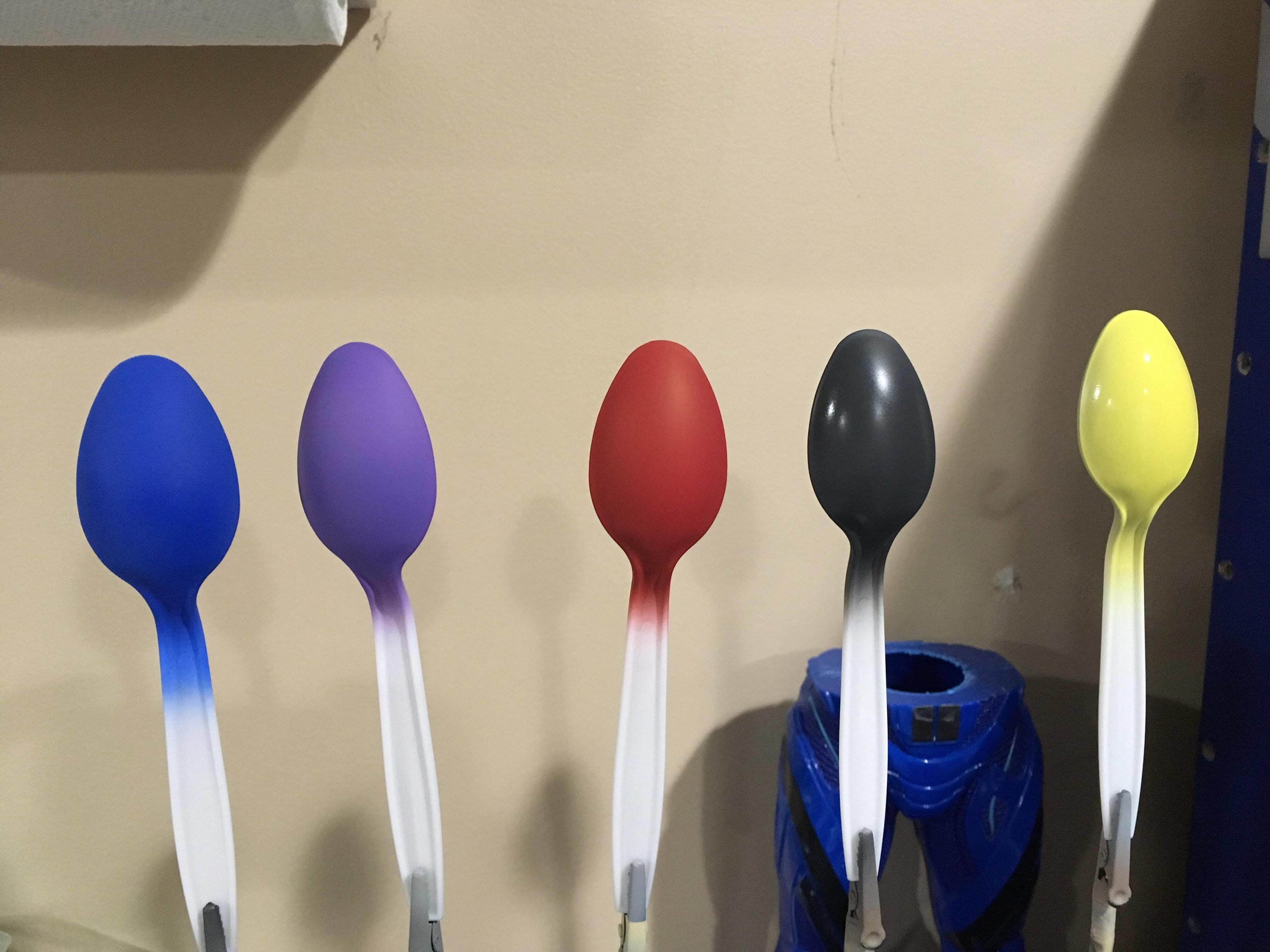


Is it me or is it a modeling trope to see paints, especially metallic paints, sprayed on plastic spoons? I wonder how all that started. Anyway, much like spraying picnic utensils to see what paint looks like, we can test new painting or weathering techniques on a paint mule, an old-built model, or a cheap swap meet kit. Ever see someone just giving away finished models at the LHS or at a show? These are wonderful testbeds for all sorts of experimentation. And if you just can’t make that sacrifice, well, there’s nothing wrong with trying out some new products on a spare piece of evergreen sheet styrene. Surely, you can sacrifice a slice or two of that.
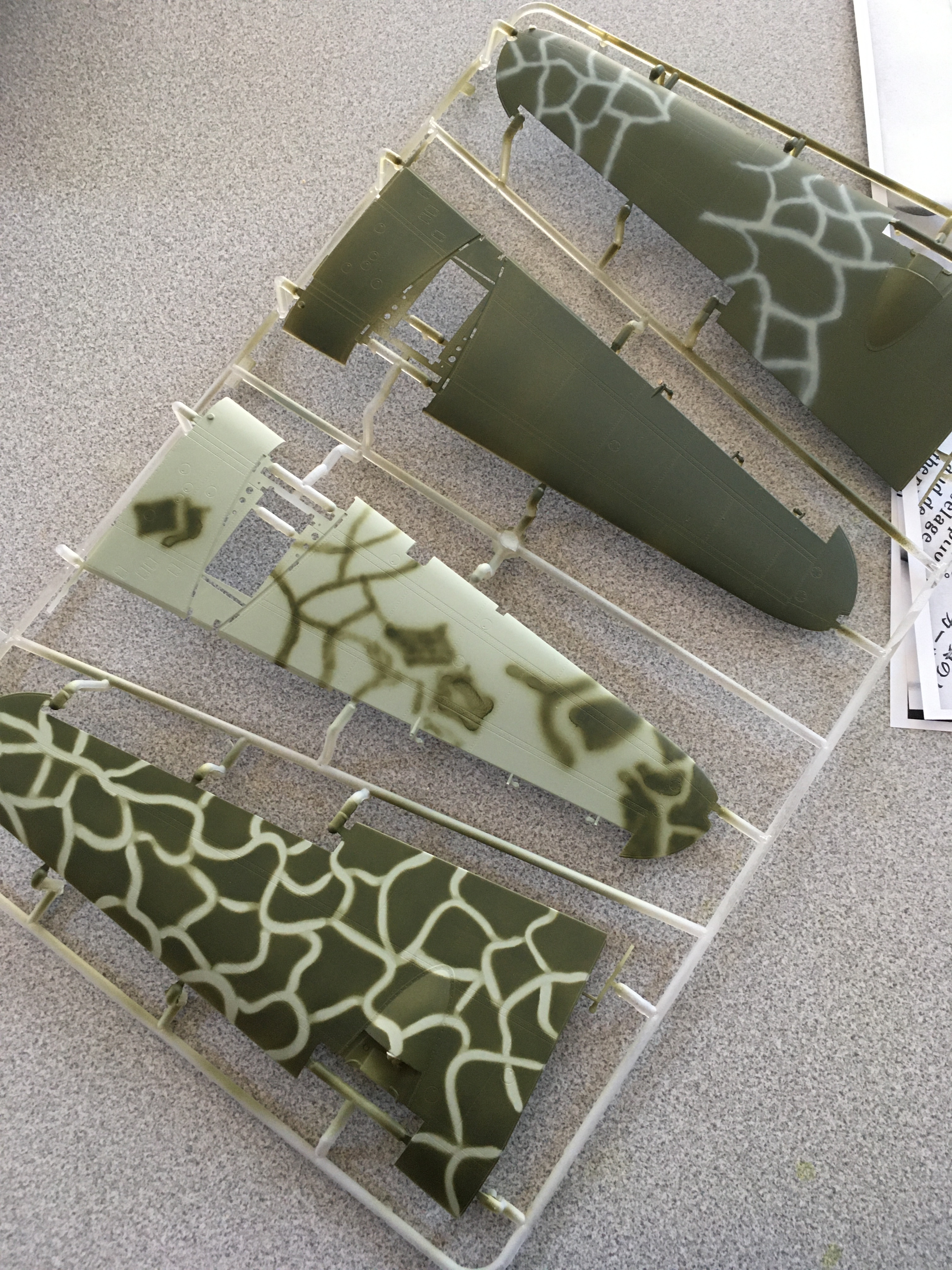
For both Big Nicky and Little Nicky, I used paint mules as test beds to nail down the camo I was most happy with. In the case of little Nicky, I picked up a $5 Minicraft Ventura to steal the engines. However, given the relative closeness of size between the Nick and the Ventura, I built it up to dial in my freehand camo pattern. That took an entire night of trying paint to thinner ratios, air pressures, and distances from the surface. But it was well worth the time.
Zoukei Mura included plenty of extra wings in their big Nicky kit. That allowed me to experiment without any sacrifices. The most important discovery I made from this process was that none of my initial ideas worked out. So, I ended up making custom masks for the camo and I was happy with that result. Sometimes experiments confirm you are going in the wrong direction.
Right now I am using a recovered Hasegawa F-104 Starfighter for the sole purpose of testing some metallic paint techniques for an upcoming build. Don’t worry; this model was hardly a sacrifice as it was found with a pile of snipped and missing parts. But it will give me a great way to test some techniques that will give me a mirror finish on some parts of the fuselage while also giving me some ‘cloudy’ finishes on other parts – just like the real thing.
I have a feeling the first attempts will not work but that’s kinda the point.
Old School Multiple builds
I’ve been told by some old-school modelers that the real old-school masters would buy multiples of their kits and build them in succession to work out the kinks and perfect the build. And I’ve gotta say: that’s a step beyond the sacrificial paint mule. Two, three, or more of the same kits is dedication. It could be these masters were working with the less-than-ideal kits from the iron age. Some of those old kits needed a few attempts at construction (I’m thinking the infamous Hasegawa 1/48 Tomcat or the Monogram F-106). However, given the engineering of today’s kits, this type of building may no longer be necessary. Considering the price of today’s bigger kits, few might want to do this.
Then again, my 12th Tamiya Corsair was far better than my first. Maybe these old school guys were onto something.
Build Like Kits
Maybe building three identical kits at the same time is overkill. But maybe you want to build a skill or perfect a technique. So why not do successive builds in the same genre? Think a freehand finish of a tri-colour Wildcat, Hellcat, and then (of course) a Corsair. Or maybe a natural metal Sabre, followed by a Super Sabre and then a Starfighter. With each kit, your skills will improve and you will have a gorgeous collection of models at the end of the day.
Last thing
Of course, the best and simplest way to practice is to turn off the YouTube, put down the phone, pull a chair up to the workbench, and just build. The more kits you build and finish, the better your overall building and finishing skills.
But don’t discount the idea spending some time to invest in your skills and just practice until you get it right.
 MODEL AIRPLANE MAKER
Leave a comment