

There are some facts that may have been solid and widely acknowledged for most of my lifetime, but, for whatever reason, have become forgotten or less believed over time. Off the top of my head we have: Pluto (as a planet), the moon landings, and the earth being spherical in shape. Coupled with those apparently ‘debatable’ facts, are bits of history that have also been forgotten or easily doubted today. Like the idea that Canada once had the world’s third-largest navy with honest to goodness aircraft carriers. Or that Canada had some 60 squadrons of cutting-edge fighter aircraft scattered across Canada and western Europe.
I know. I know. These facts are hard to reconcile when you think about the Canada of today. What, with it having less than 1% of the world’s population and less GDP than California. Of course, budgets and priorities being as they have always been; Canada’s level of 1950s defence flexing was unsustainable. So, at some point in the 1960s, Canada started the inevitable wind down of its forces.
But before all that happened, there was a time when Canada took Europe’s security very seriously. Seriously enough to have a nuclear strike responsibility in Europe. Yeah, you didn’t read that wrong. There was once a time when apologetic, humble, and hockey-loving Canadian pilots stood on 5-minute alert and ready to unleash two-stage thermonuclear weapons.
That CF-104 Starfighter was Canada’s Big Boy Pants!
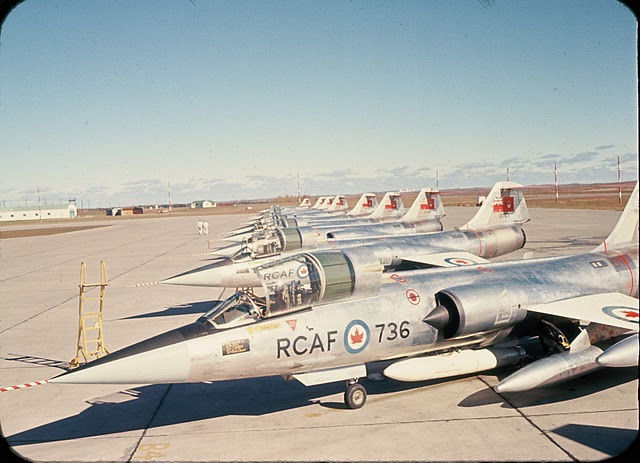
The Canadair CF-104
Shiny, pointy, silver jets are the hallmark of early cold war fighters. The Starfighter might be the pointiest and coolest looking of the bunch. But it was a weird airplane. It was designed to be cheap and fast and yes: it did those things very well. But all of the other things that a fighter plane needs to do, like turning, climbing at extreme angles, and, um, you know, not stalling and crashing? Well….. let’s just say that the F-104 needed to have good pilots who were ahead of the airplane at all times.
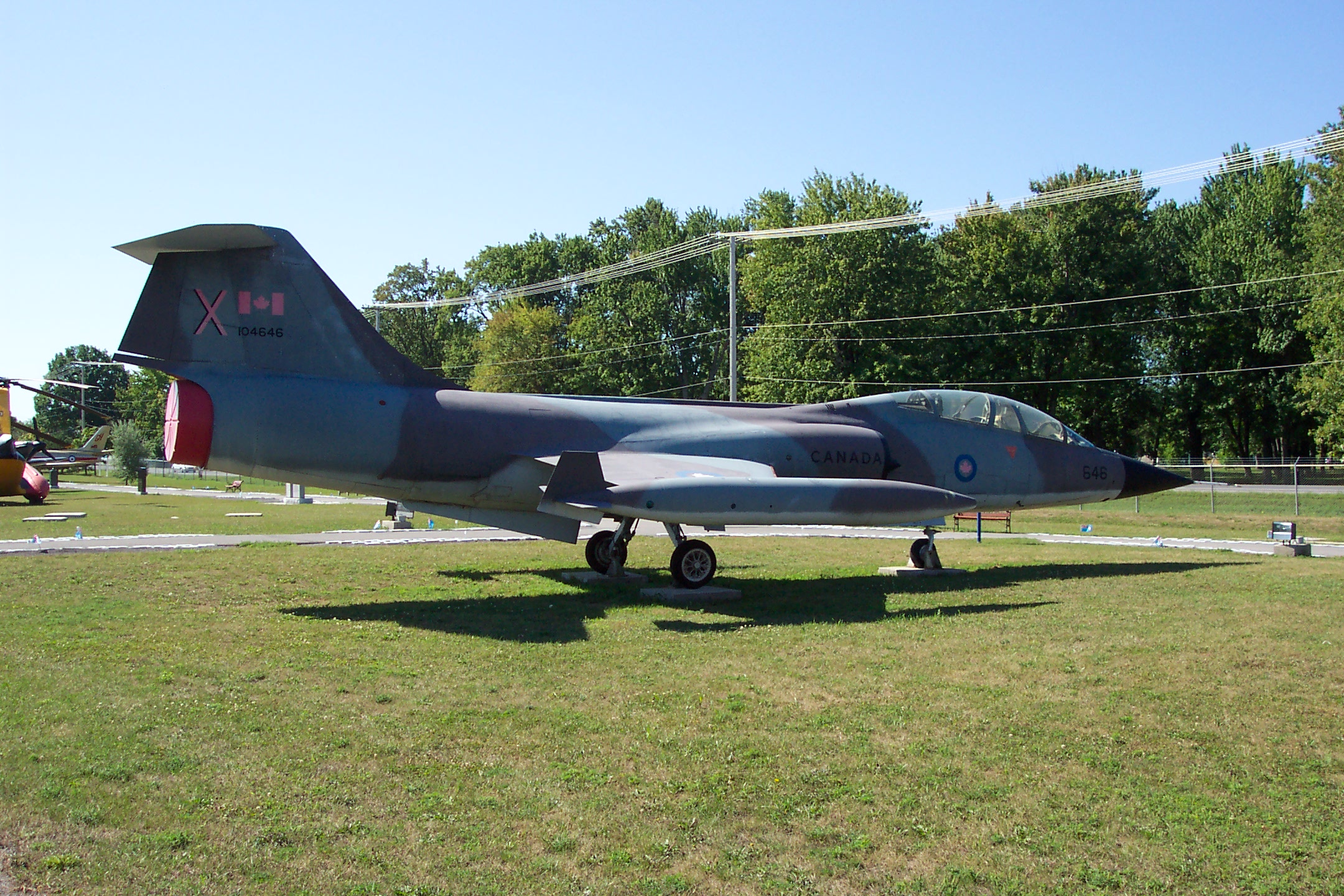
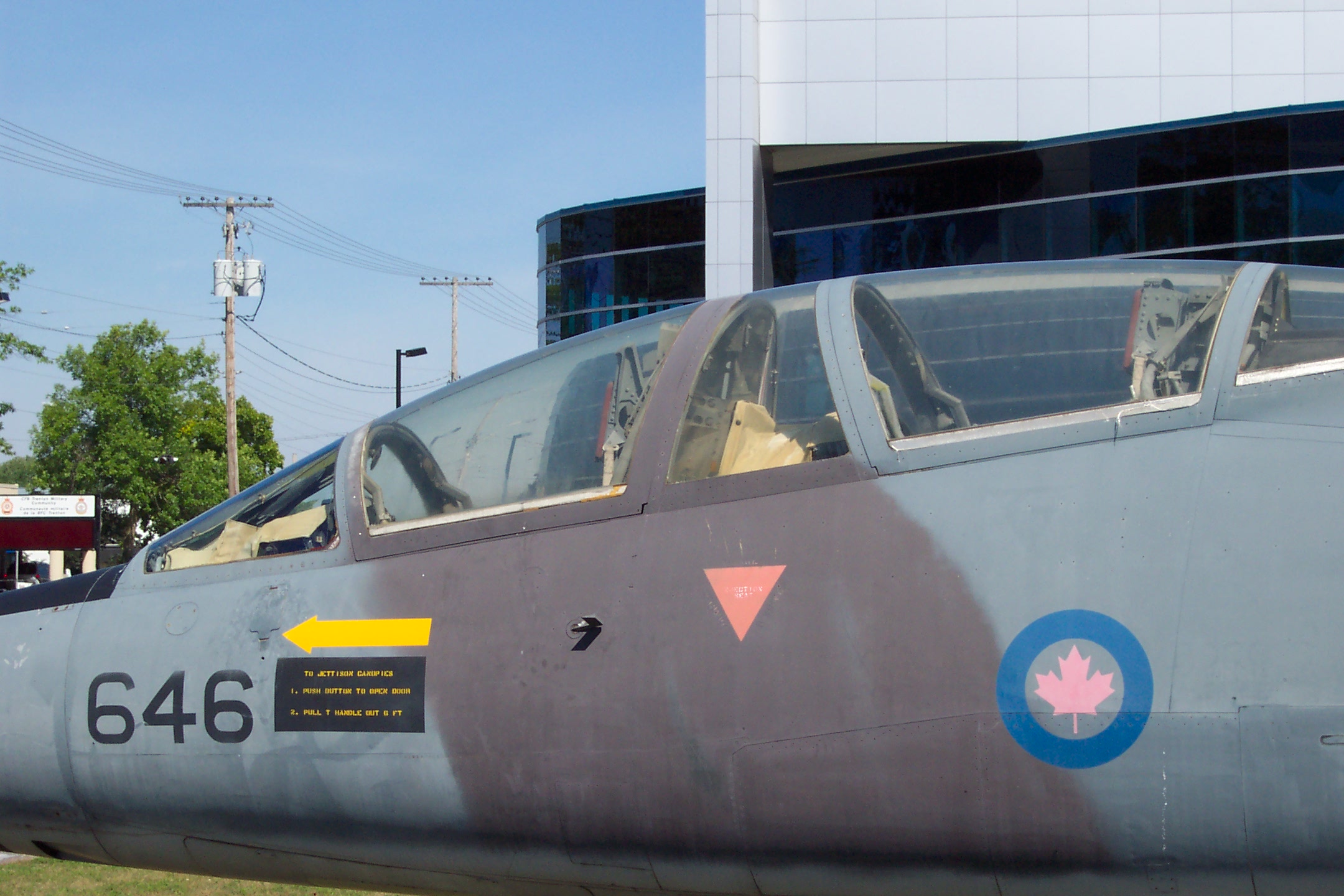
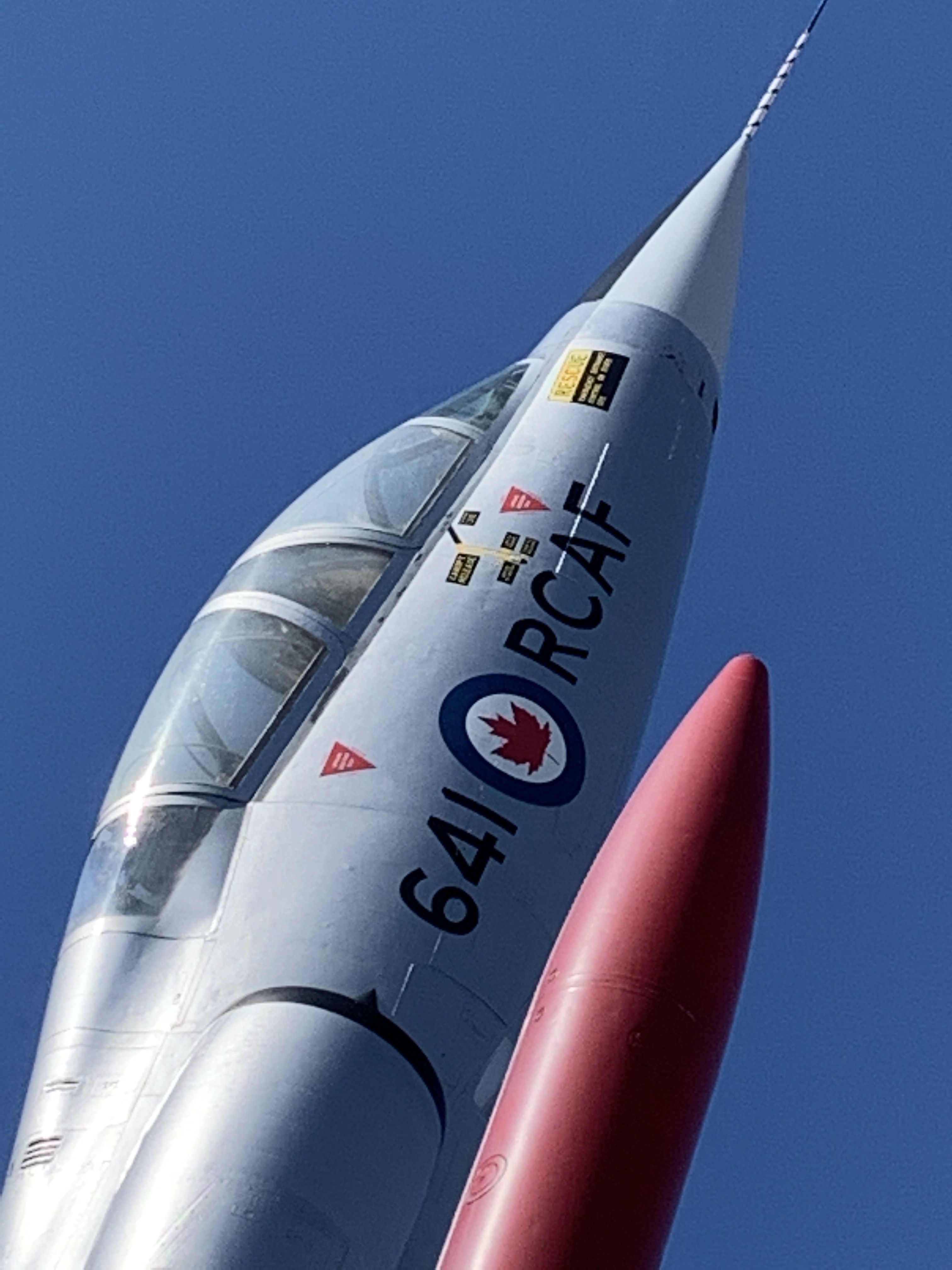
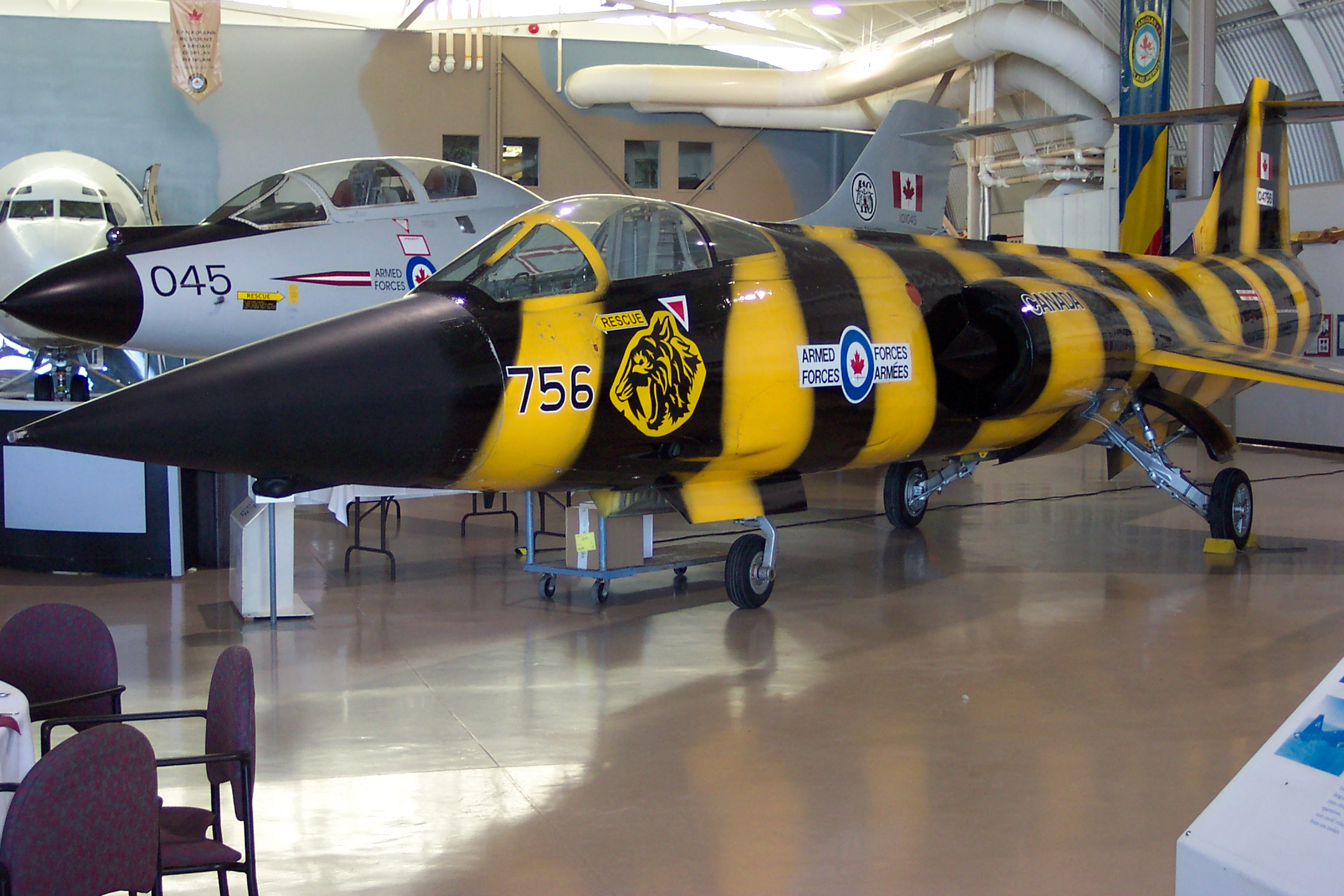
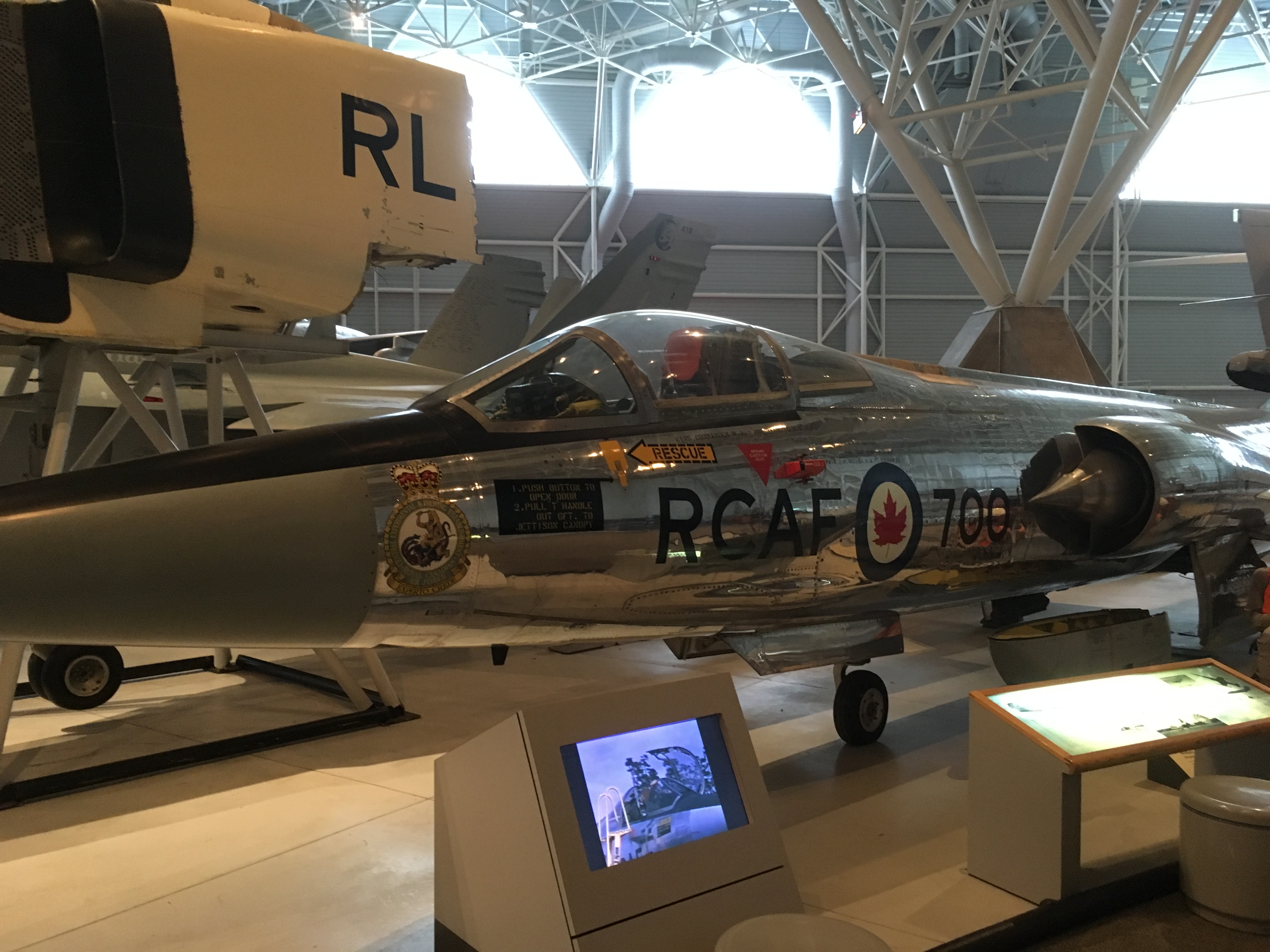
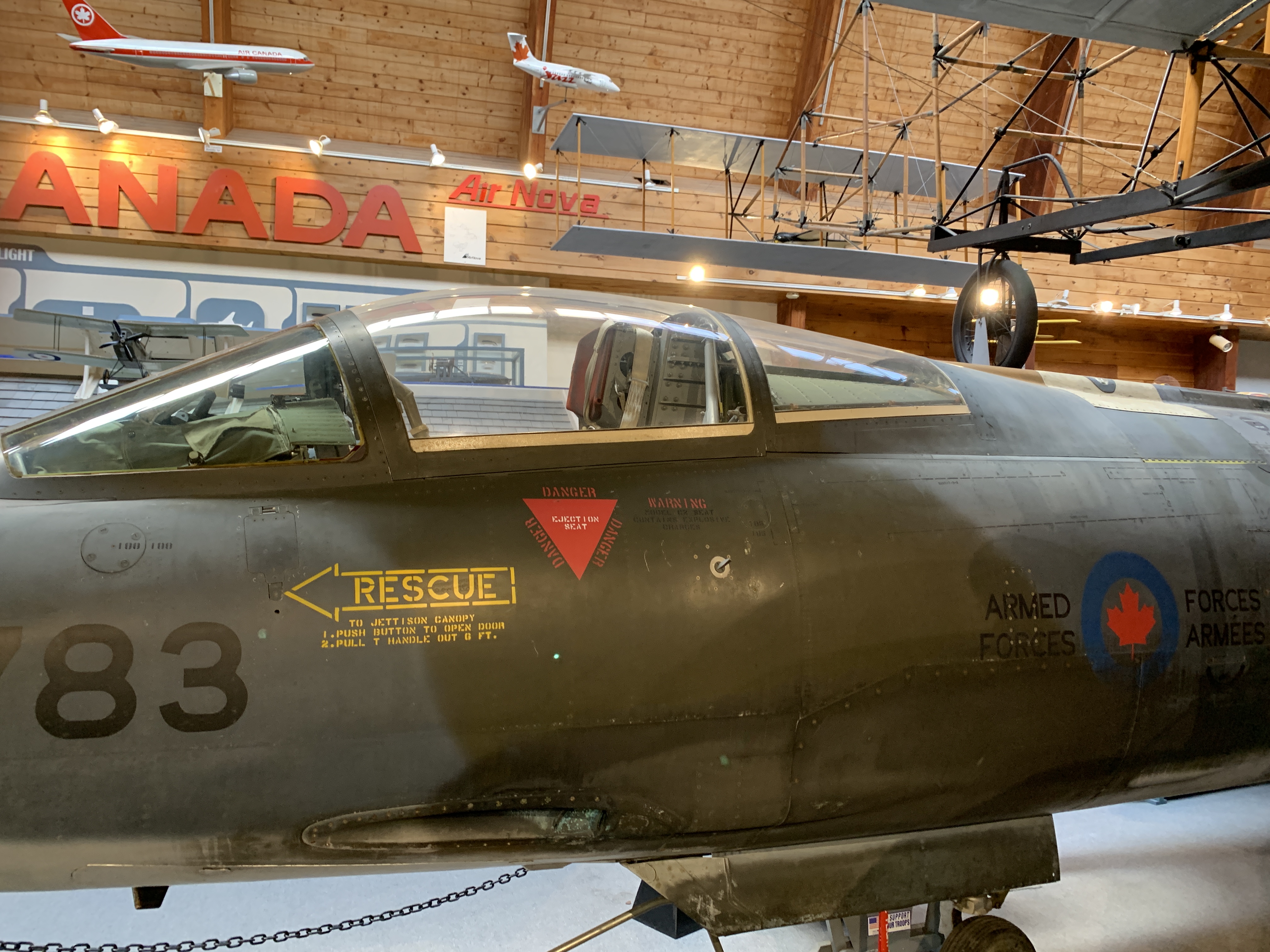
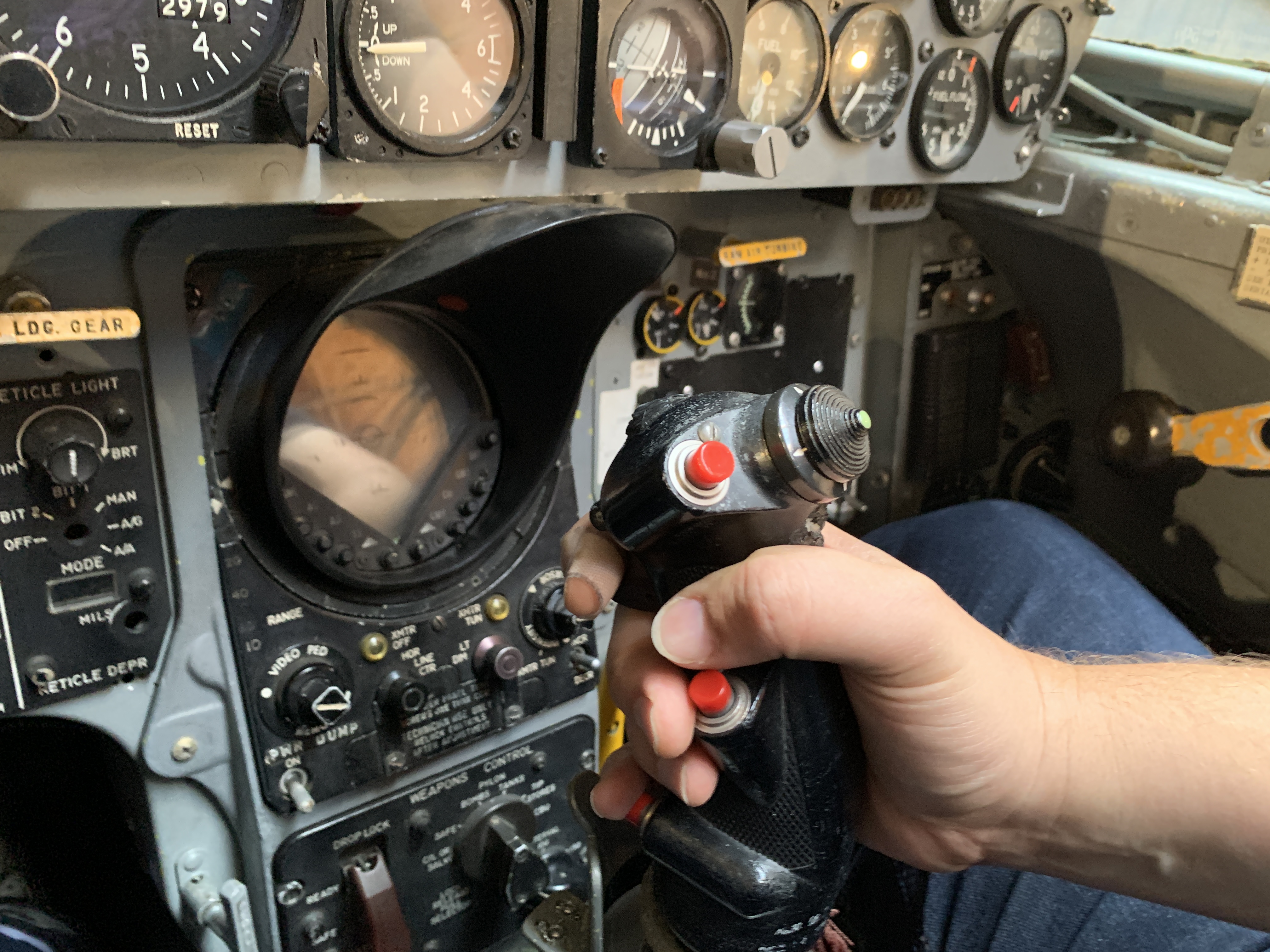
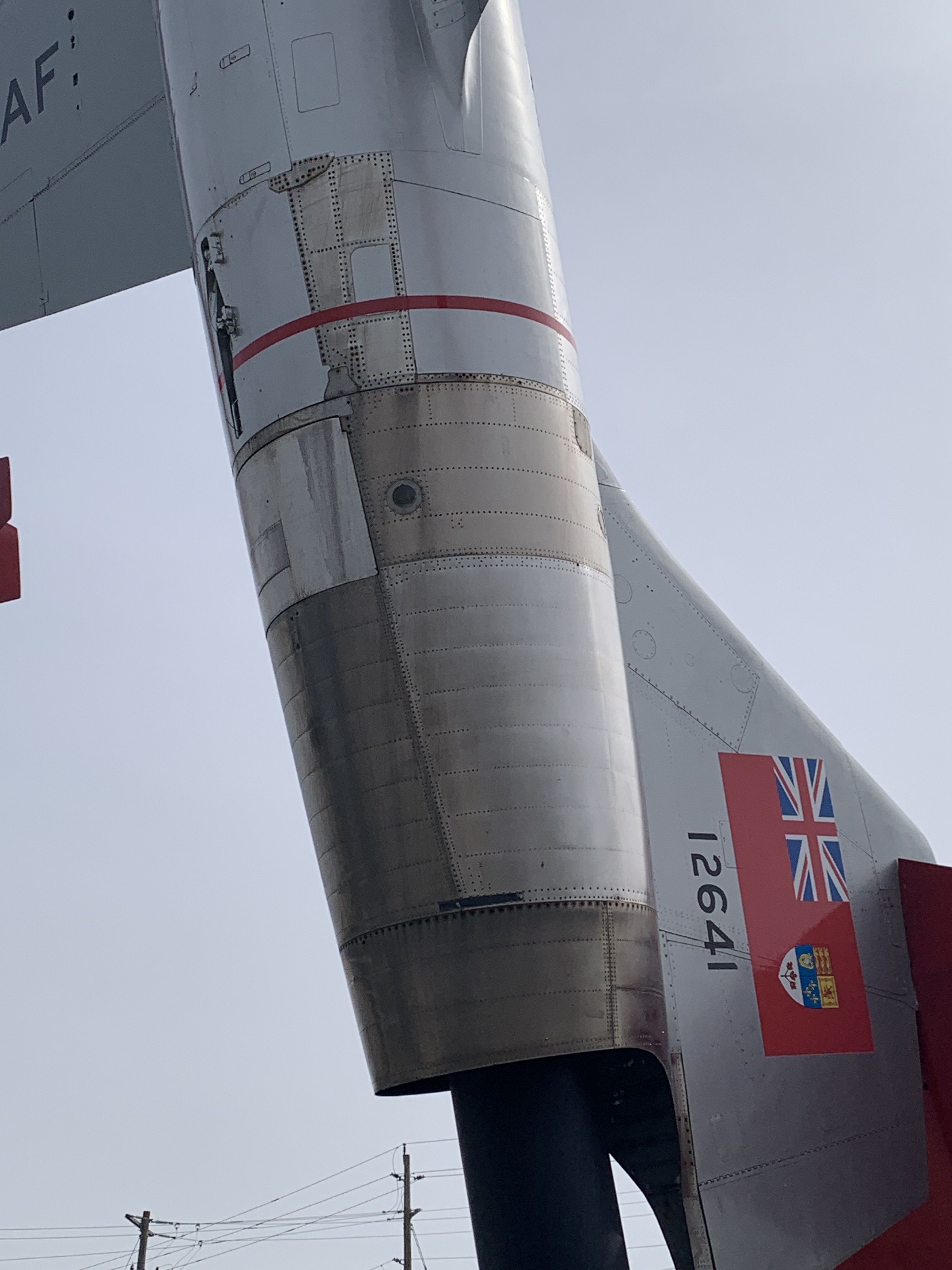
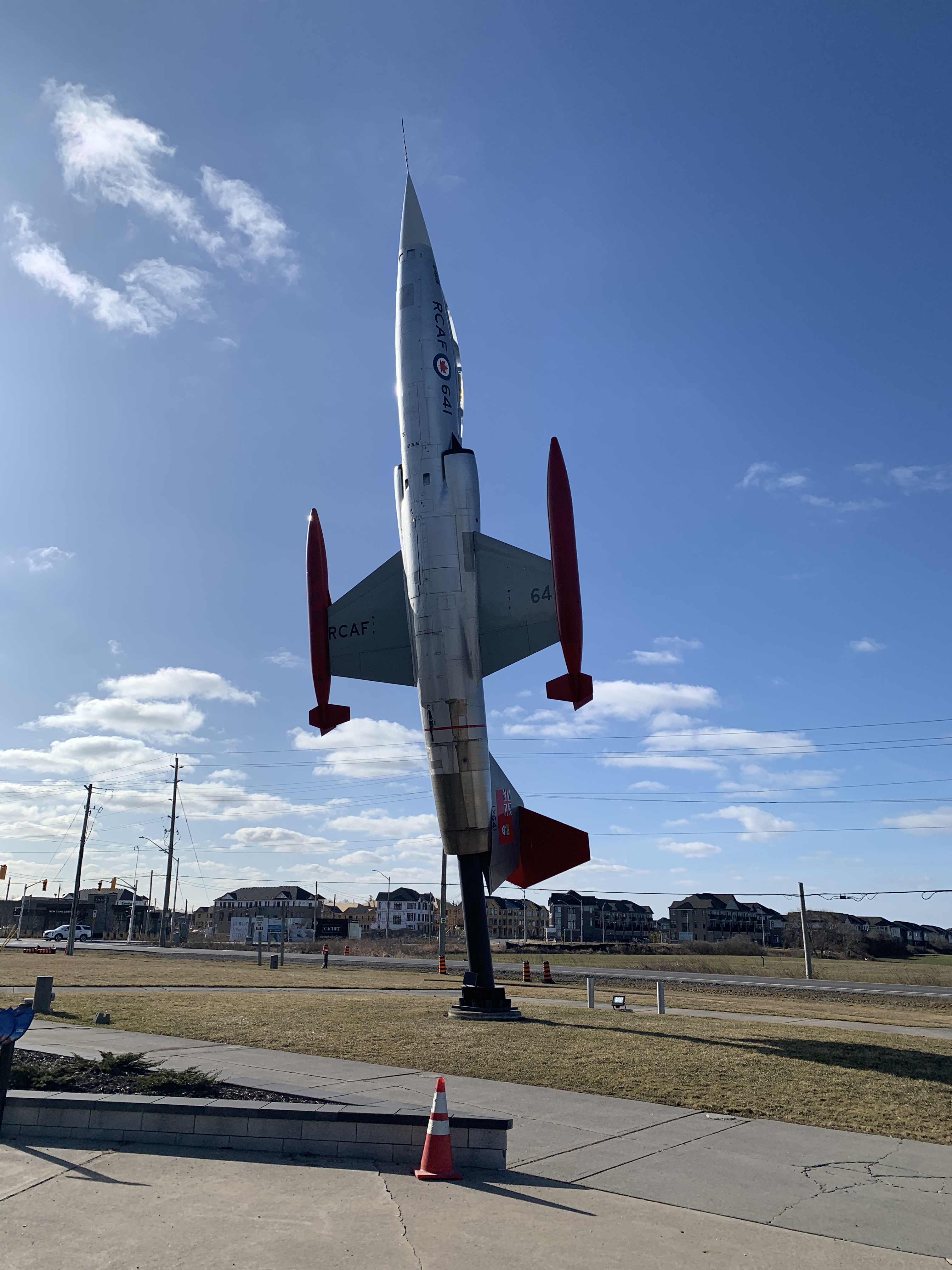
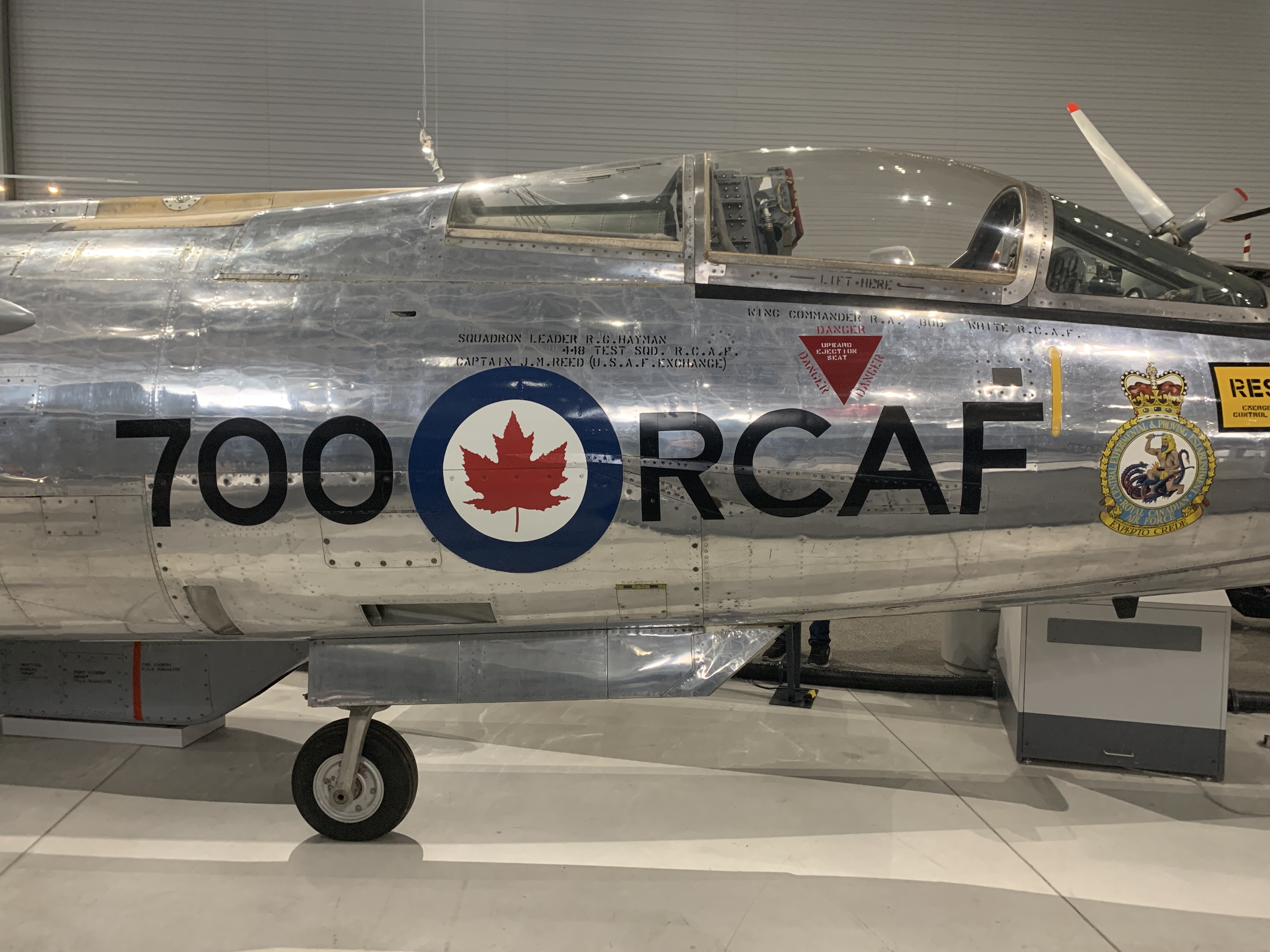
In the late 1950s, the Canadian government redefined Canada’s NATO role to a nuclear strike mission. At that time, Canada deployed numerous squadrons of F-86 day fighters but these were quickly becoming obsolete. Switching to this strike role for the 1960s would allow the RCAF to pare down its NATO commitment to something far less expensive than replacing fleets of fighters.
When it came to selecting an airframe for this new role, the Royal Canadian Air Force preferred the idea of an F-105 with a Canadian made engine. However, that was determined to be too expensive. Instead, the RCAF went with the F-104. Now, the Starfighter was definitely not designed for this role, but there were elements of the fighter that could be changed to adapt it for low level strike. More importantly, it could be manufactured under license in Montreal.
CF-104 Nuclear Bomber
From 1962 to 1971, the RCAF maintained CF-104s on nuclear alert. These were Canadian Zippers flown by Canadian pilots. The weapons were owned by the USAF. While these weapons were attached to the CF-104s, the planes remained in alert hangars with pilots in the cockpits and USAF Military Police supervising off to the side. I can’t decide whether that duty would have been easy or incredibly boring.
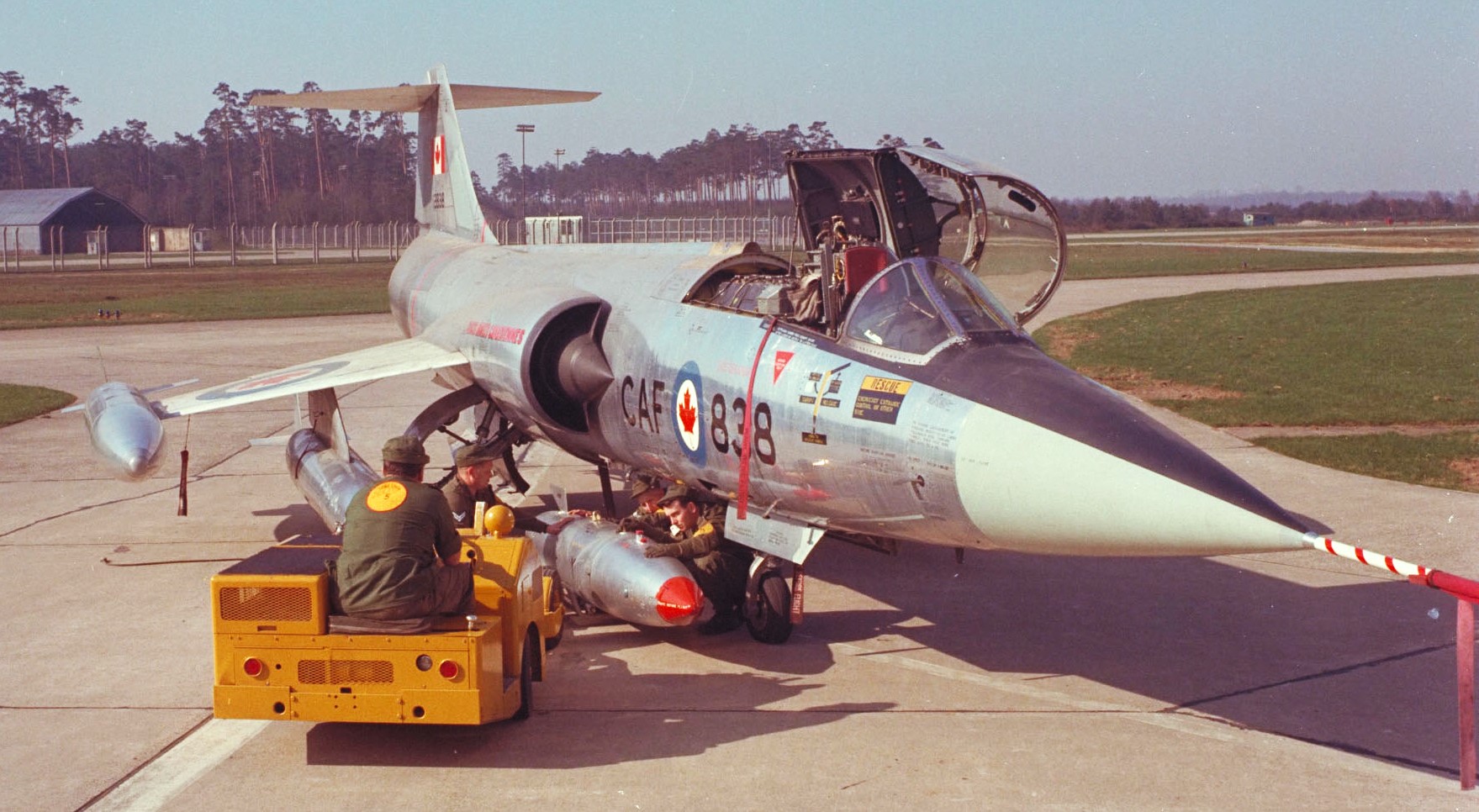
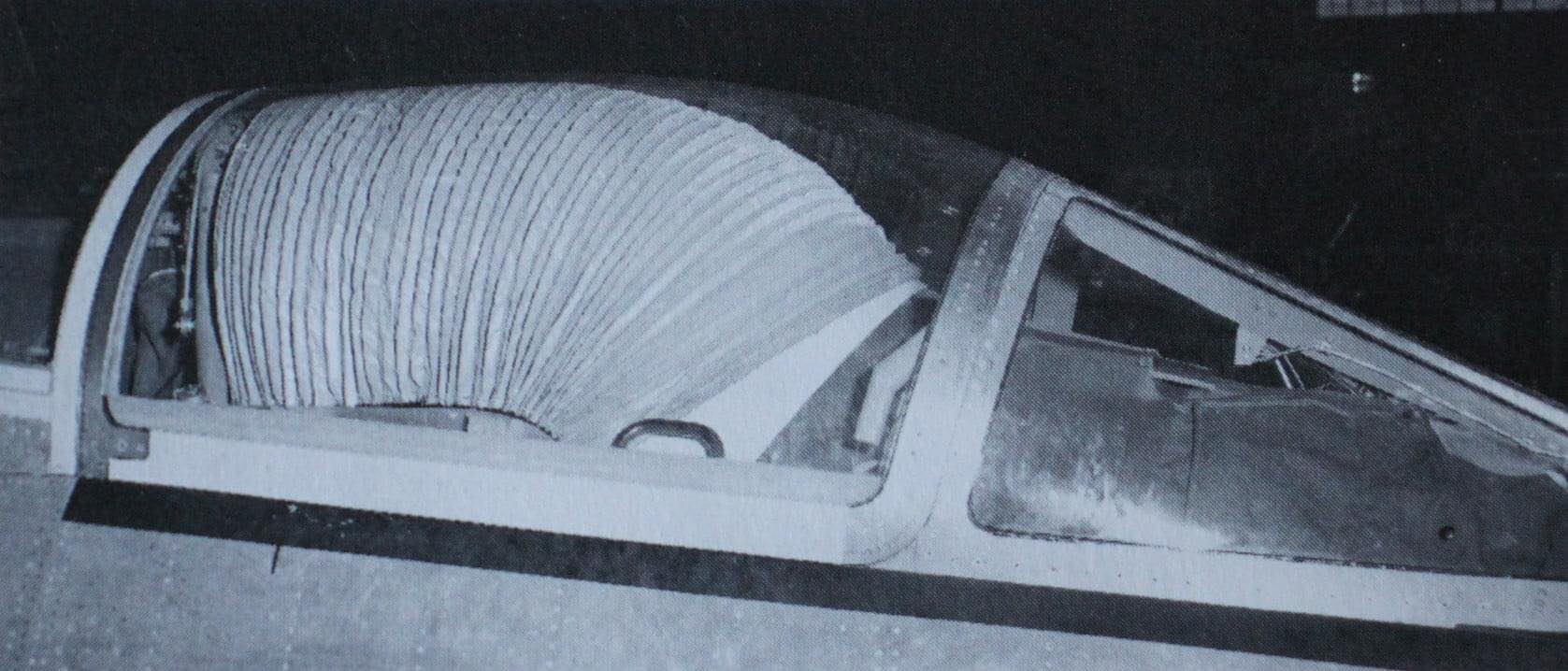
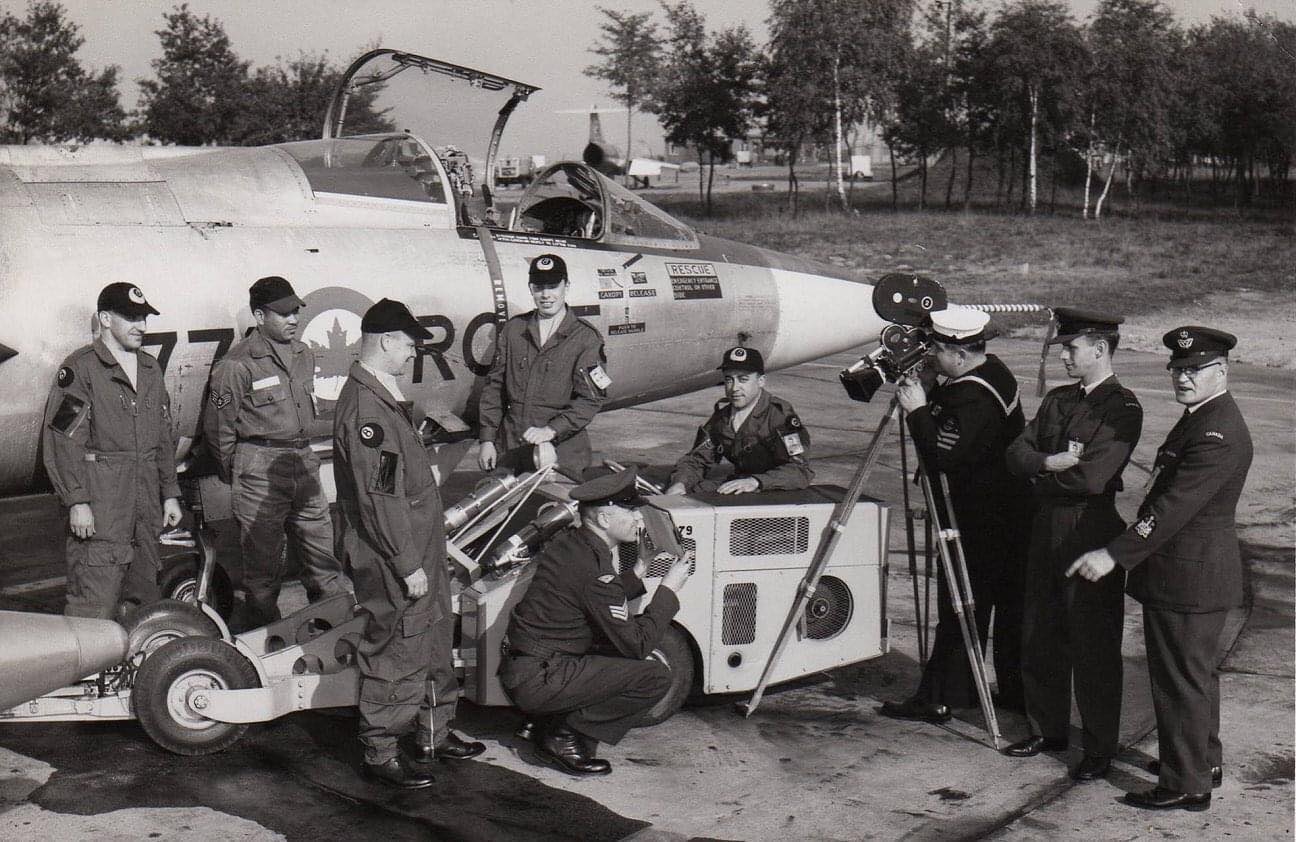
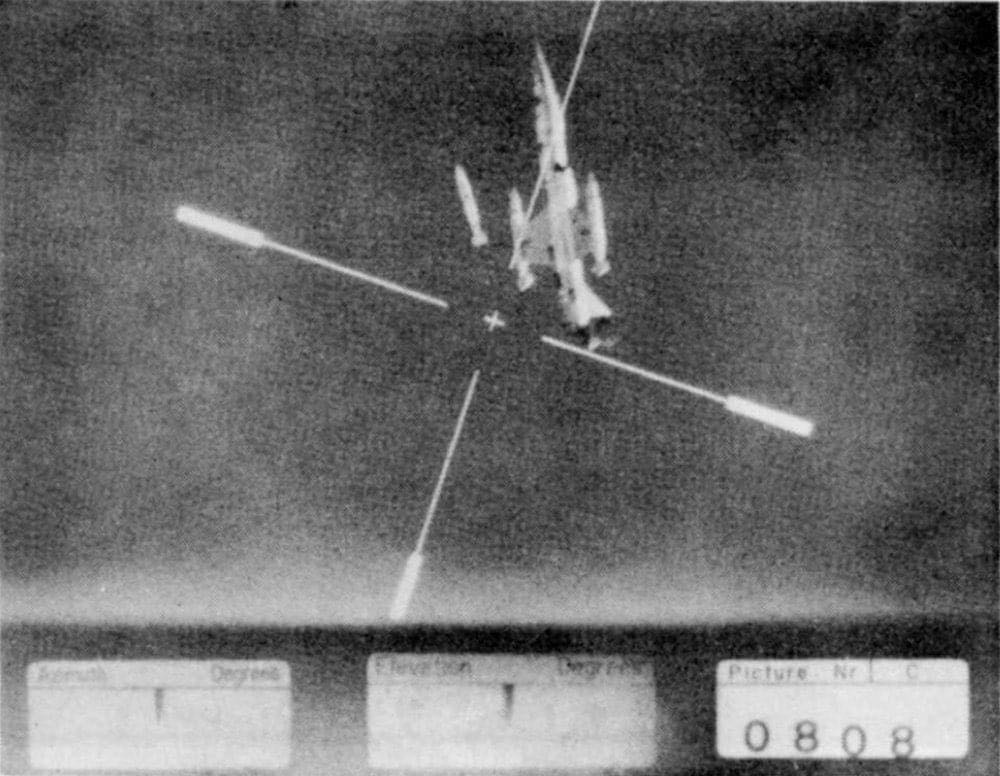
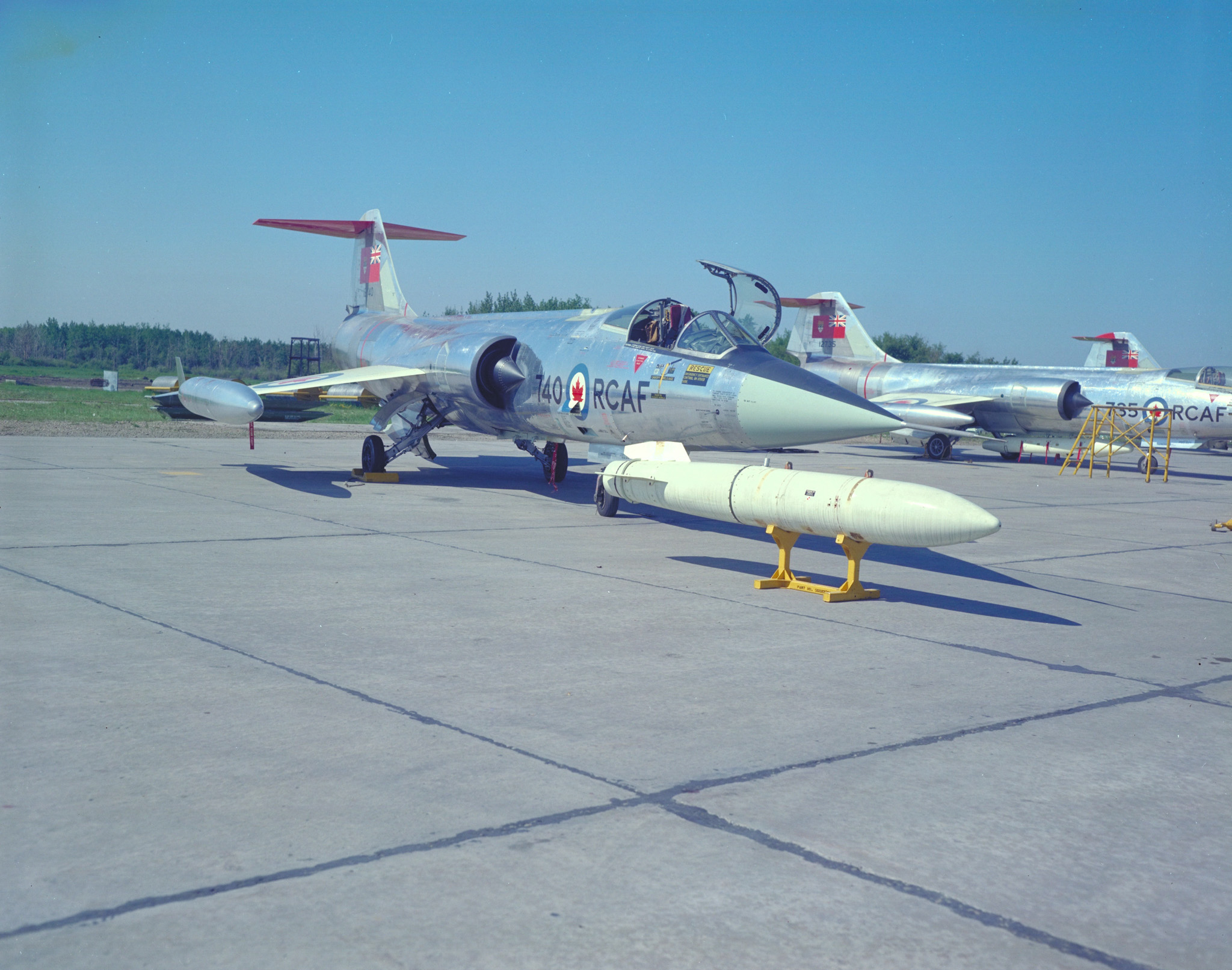
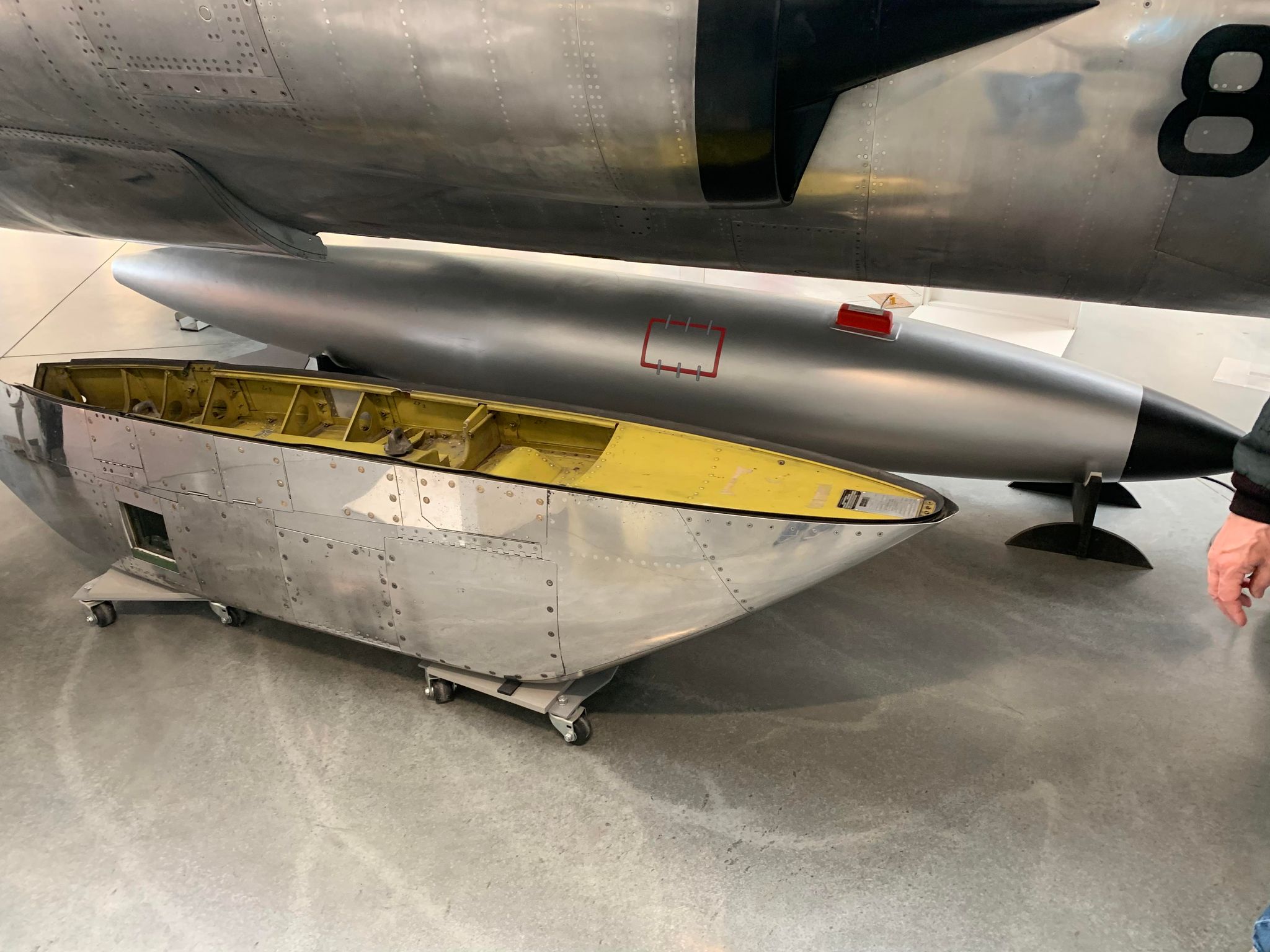
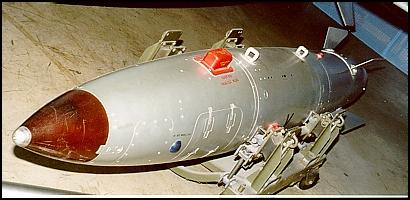
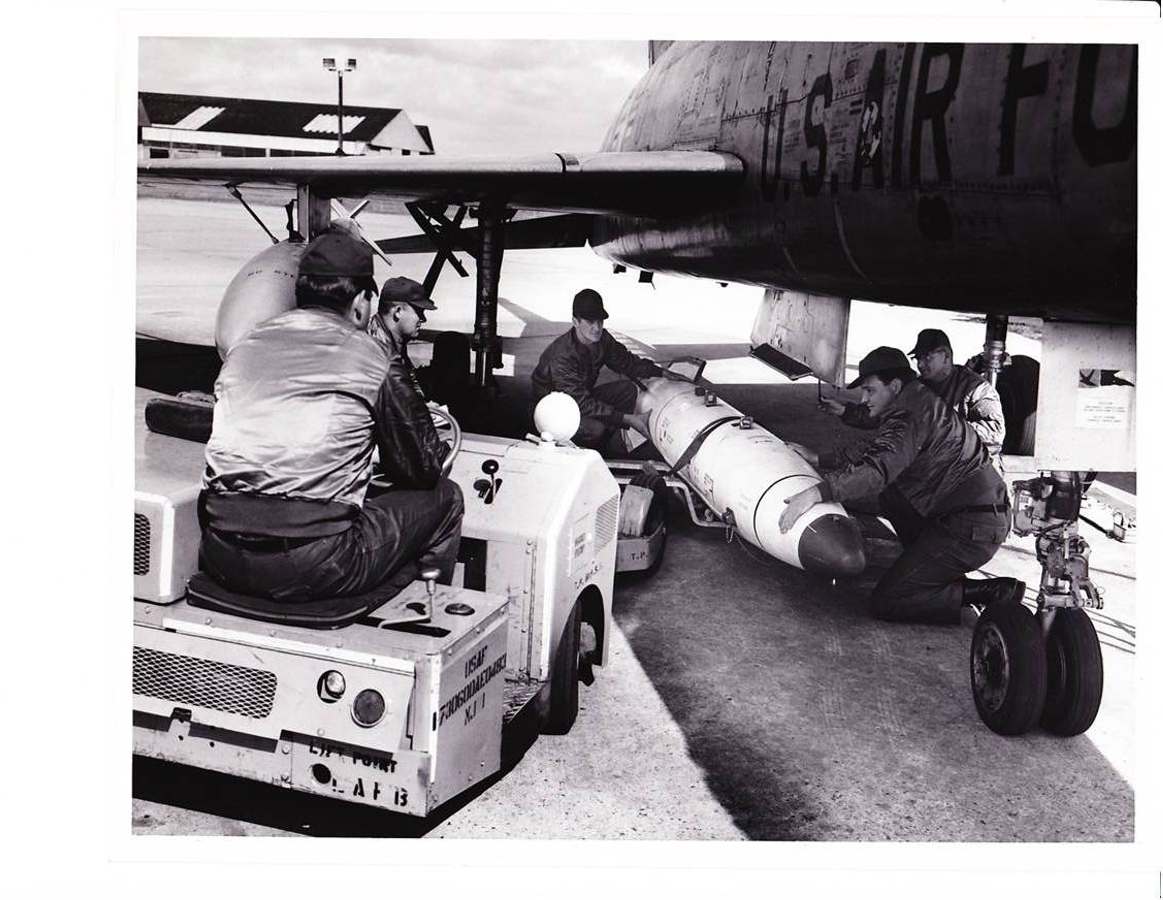
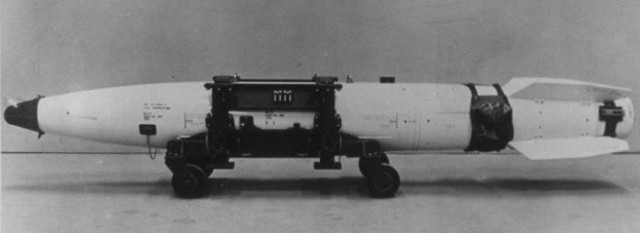
There does not seem to be any evidence that a Canadian Starfighter ever flew with a ‘live’ B28. Instead, pilots trained with dummy bombs. If you want to know more about this mission, the training and the pilots involved, there is a fantastic podcast episode available on the Cold War Conversations Podcast. I highly recommend it.
The Build
While I was taking the sprues out of the box, I was trying to remember the last time I built a 104. It was a long time ago. I know this because it was the ancient Revell 1/100 scale Zipper. I don’t remember much from that kit but I guarantee this Kinetic kit is centuries ahead of it!
The Kinetic CF-104 in the Gold box is a great value. Its got some excellent Cartograph decals allowing us to either build a natural metal destroyer of worlds or a later camouflaged Canadian Zipper. The kit also comes with a small sheet of photoetch. There’s pretty much every type of generic Starfighter gas tank and ordnance as well. The only thing missing was an appropriate Mk28 or B28 gravity bomb. For that I had to go to see my friend Mike Belcher and buy one of his CF-104 weapons sets.
Oh – the kit does not come with a center bomb rack. I got one of those from Hypersonic models – and that was a nice bit too.
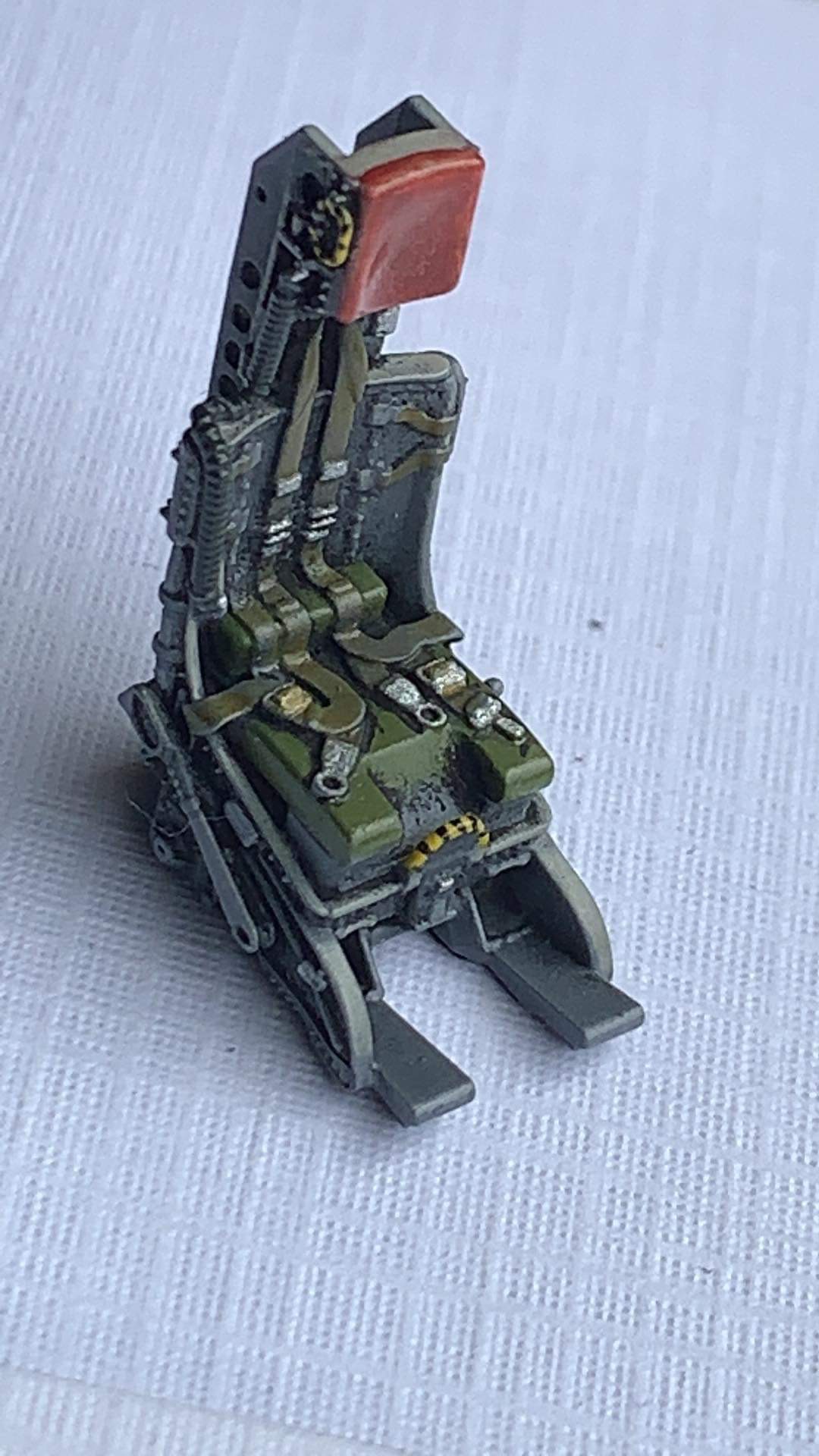
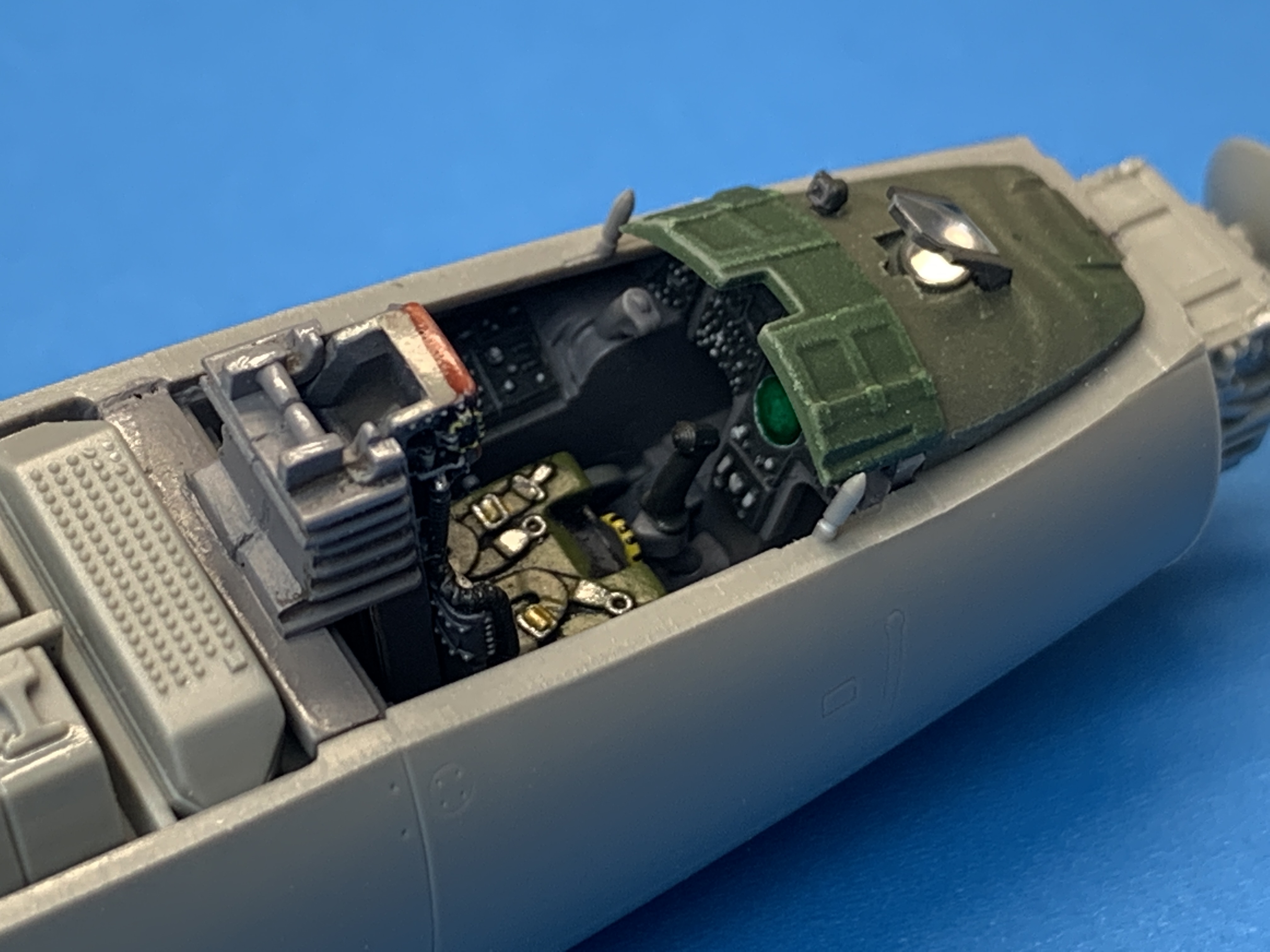
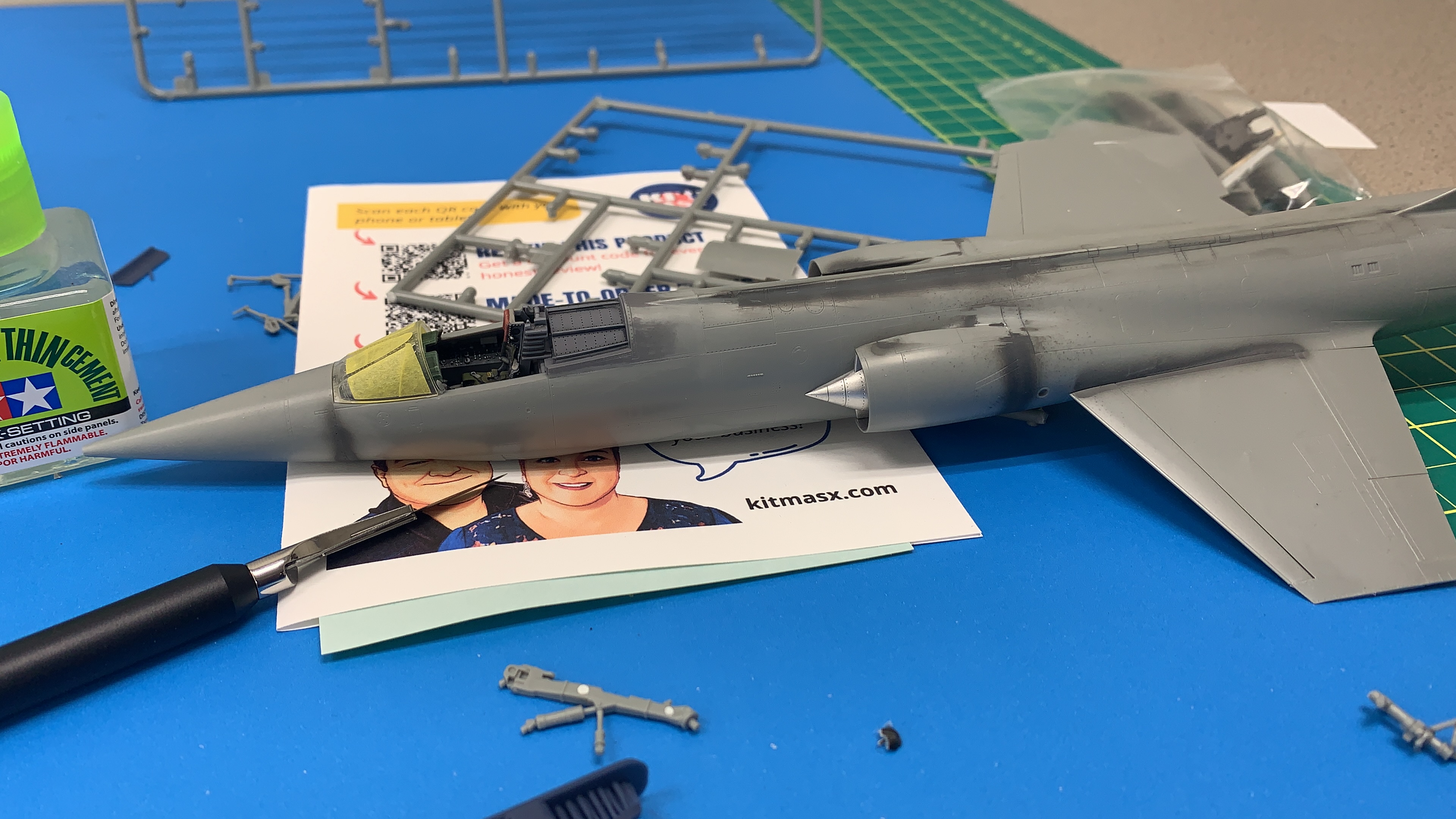
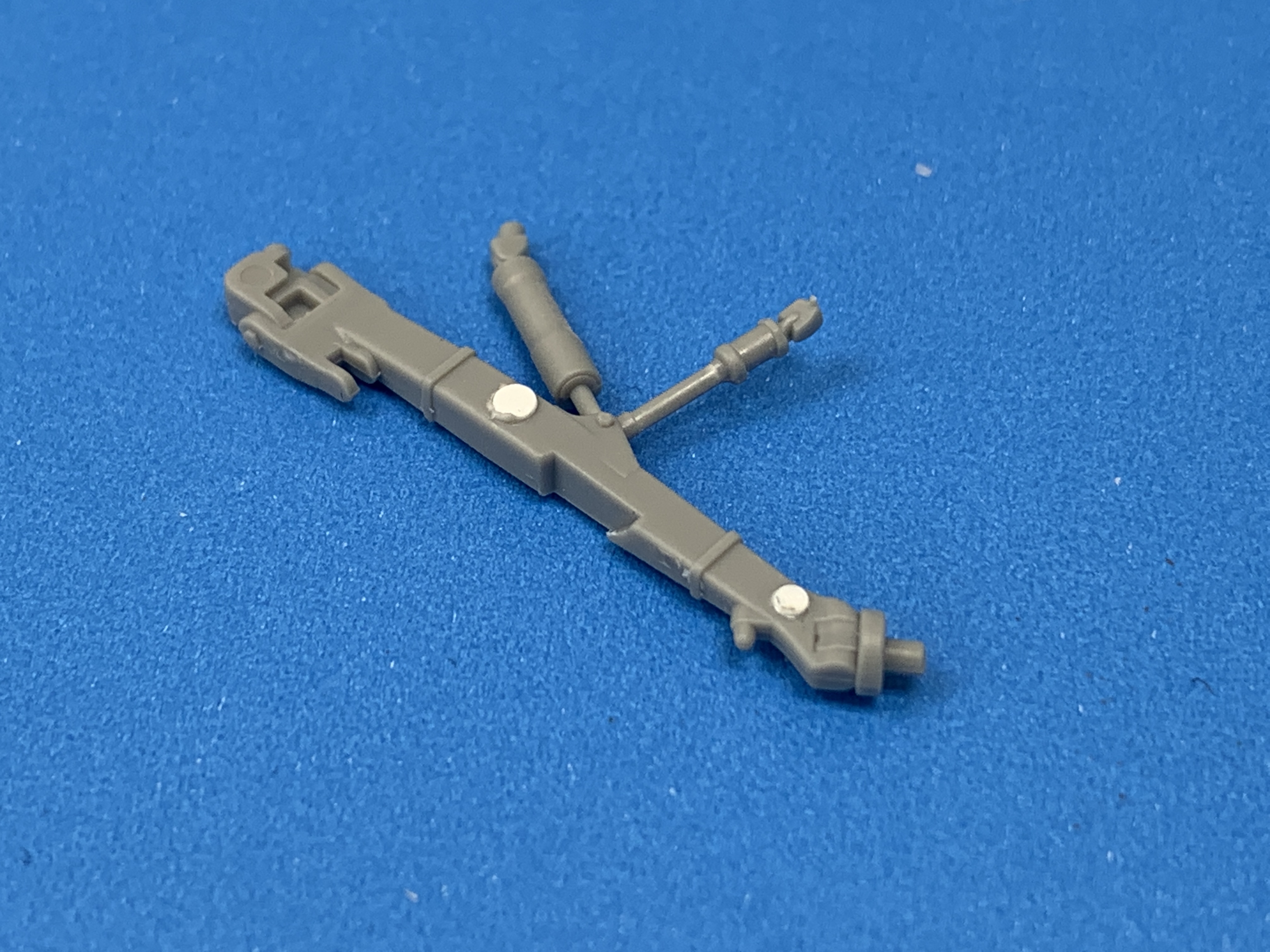
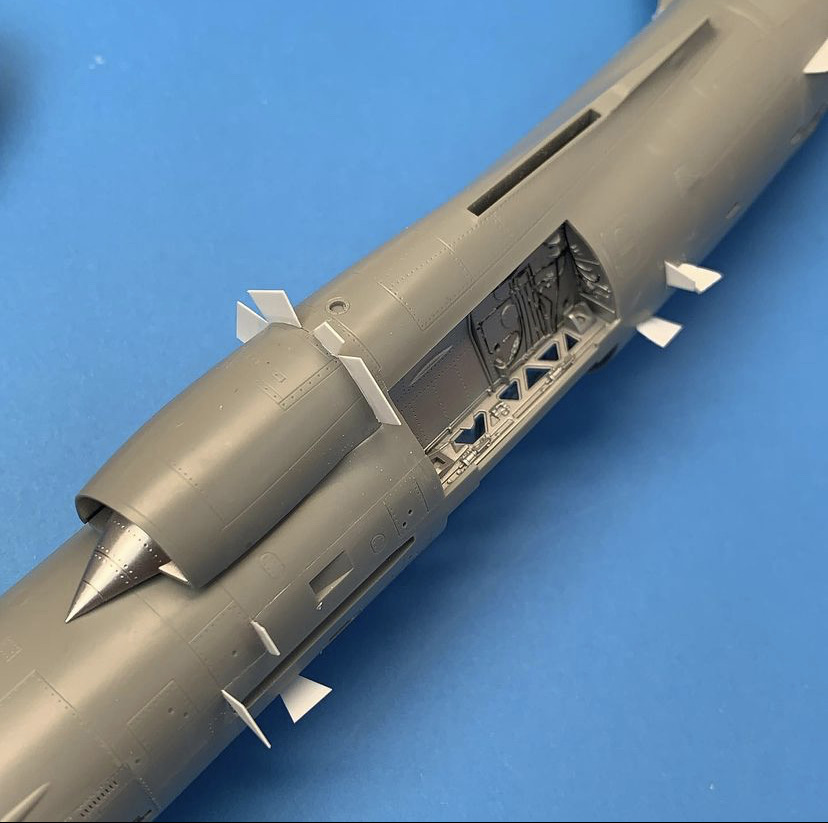
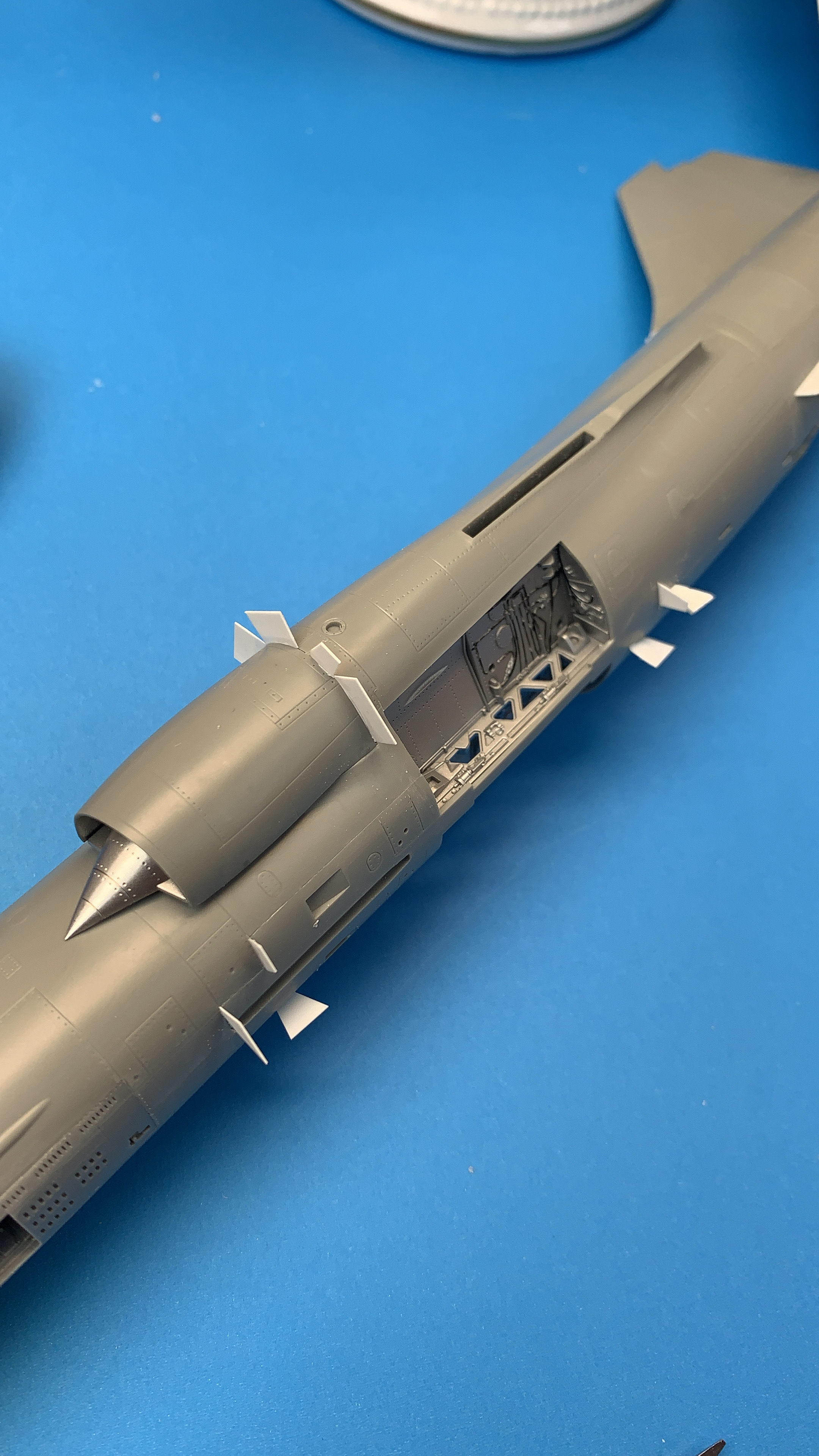
All in all, the build experience with this kit was positive. The cockpit was a gem and went together like a Swiss watch. I decided to splurge on an aftermarket bang seat from Wolfpack but I didn’t have to. There were a bunch of subassemblies that needed to fit into one of the fuselage halves. They all fit nicely and the fuselage closed without any issues or gaps. So yeah, the build is better than most.
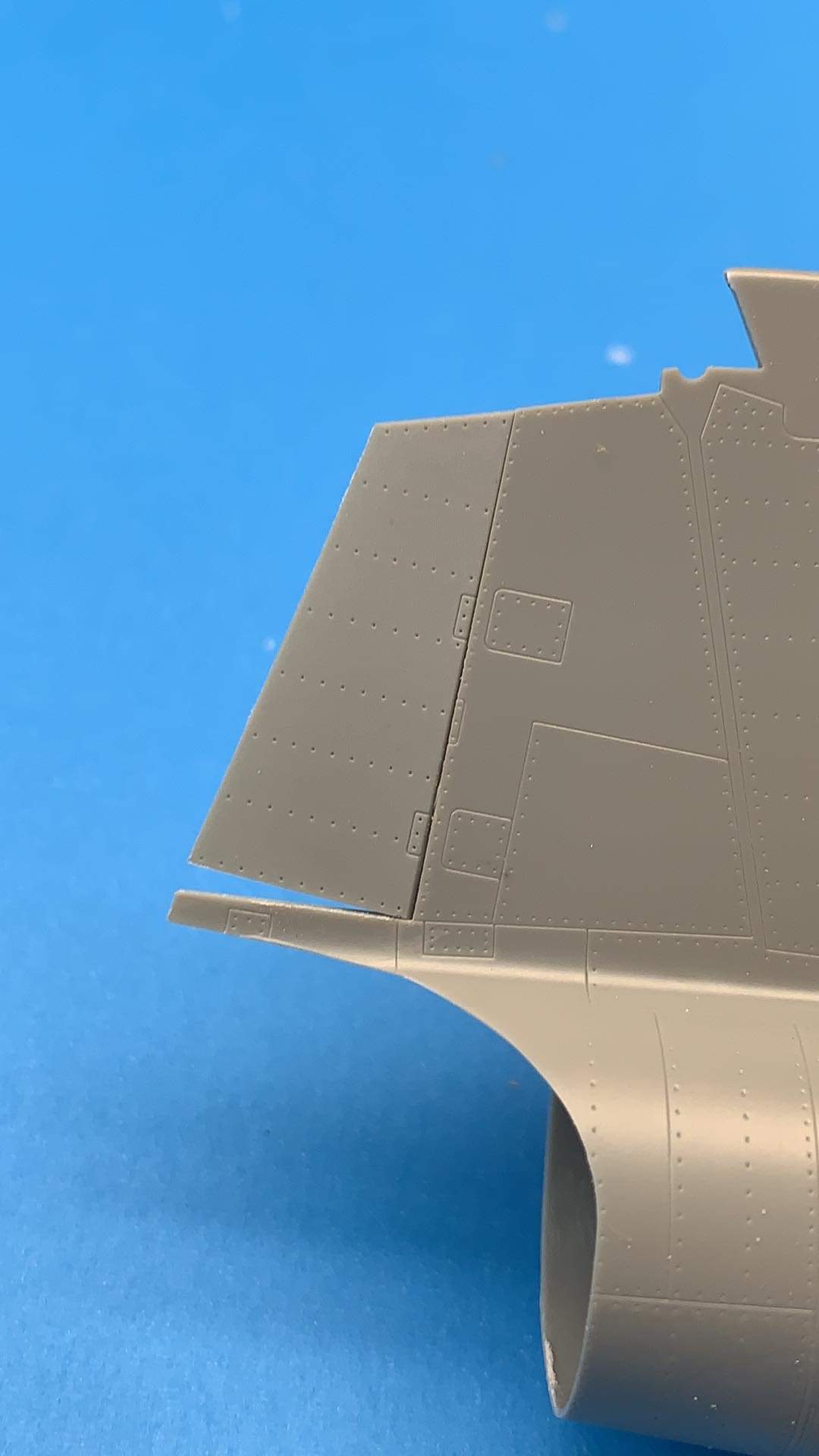
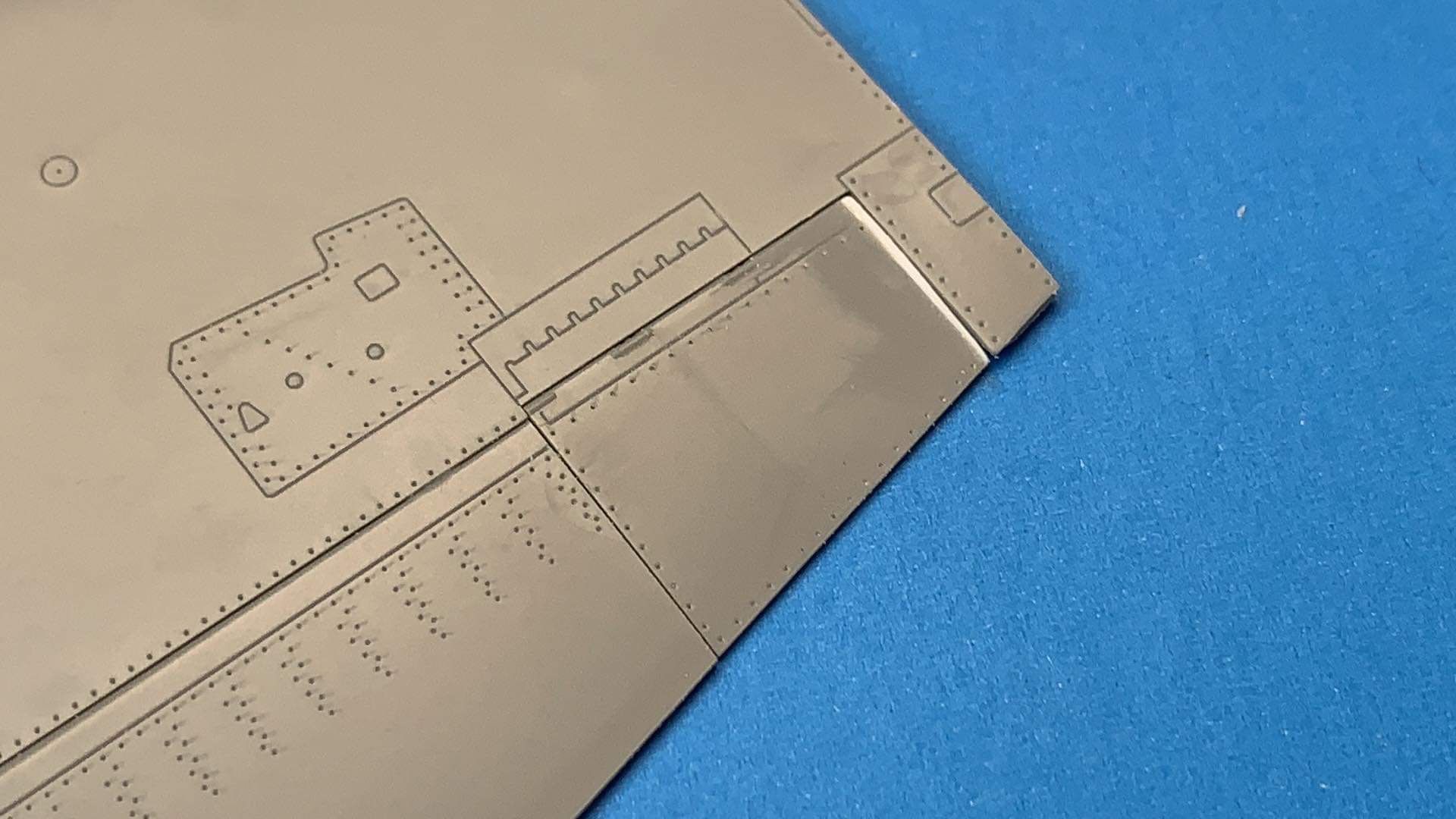
If I had any criticism (which I don’t) it would be the gaps around a few of the panels on the underside of the fuselage. And there were some gaps on one of the ailerons and the rudder. These were easy fixes with some scrap styrene. As I have mentioned before, I do not think much of putty as a gap filler. It is messy, it is imprecise and if you have to scribe it afterwards, your results can vary. Scrap styrene, on the other hand, is so much easier, faster and far less messy. Of course I will use Vallejo putty for hairline cracks as it is simple to use and requires the teeniest amount of clean up.
Painting
Since I went with the nuclear strike option the paint scheme is easy: bare metal. I consider a good bare metal finish (or natural metal finish or BMF) to be one of scale modeling’s brass rings. I’ve tried it a number of times using different methods. I am not going to lie to you: I am still learning. But one thing that I have little patience for is paint that is too fragile to mask. So, this time I tried Vallejo’s Metal Colors and I go into some detail in this video.
Final Assembly
The end of the build involved the installation of many bits. Tip tanks, landing gear, pitot tube, at least a half dozen clear lenses, photo etch, and the canopy. The resin B28 had to be assembled from 3 major poured resin components. The bomb fins had to be scratch-built out of very thin sheet styrene and glued into place.
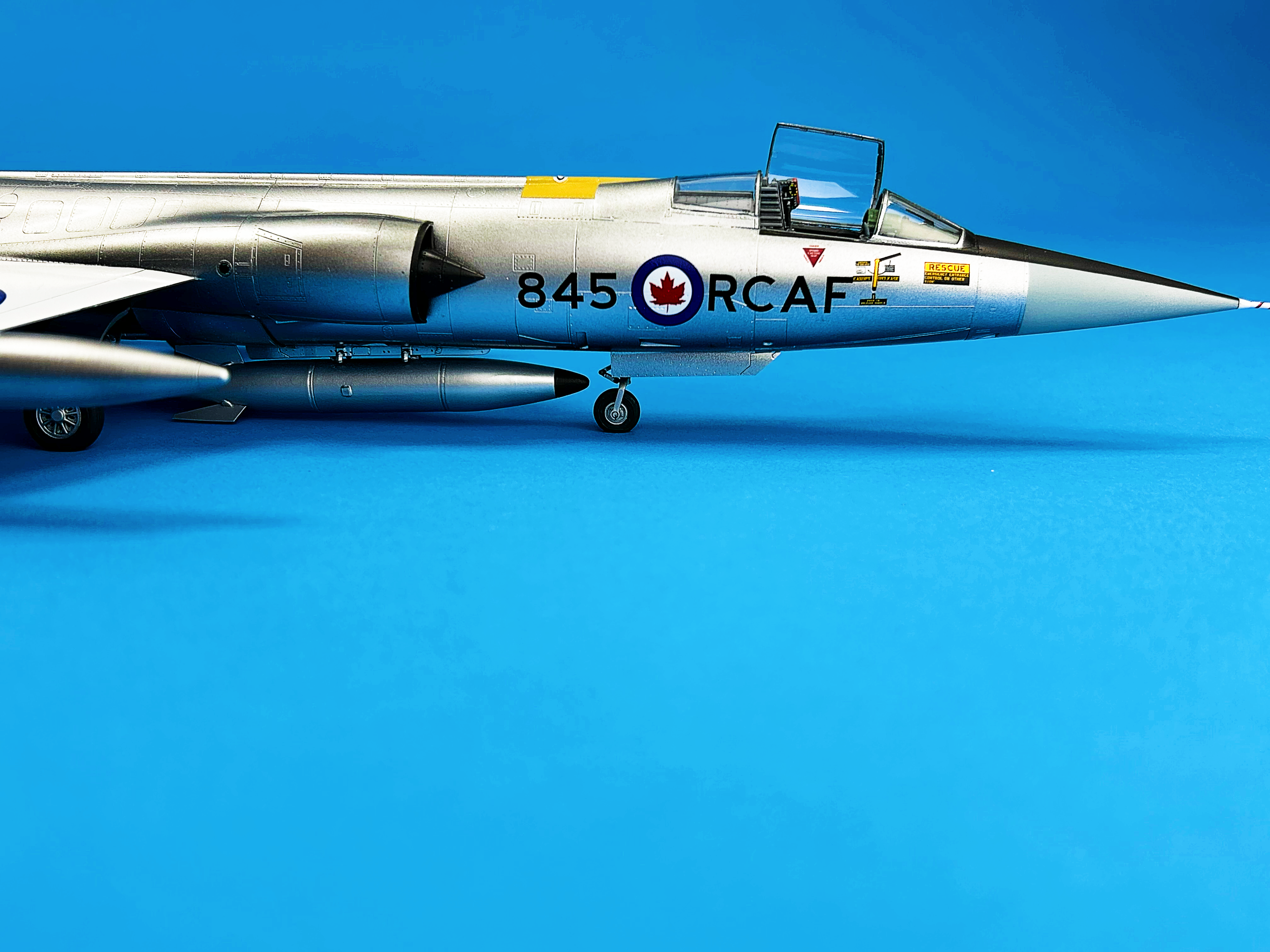
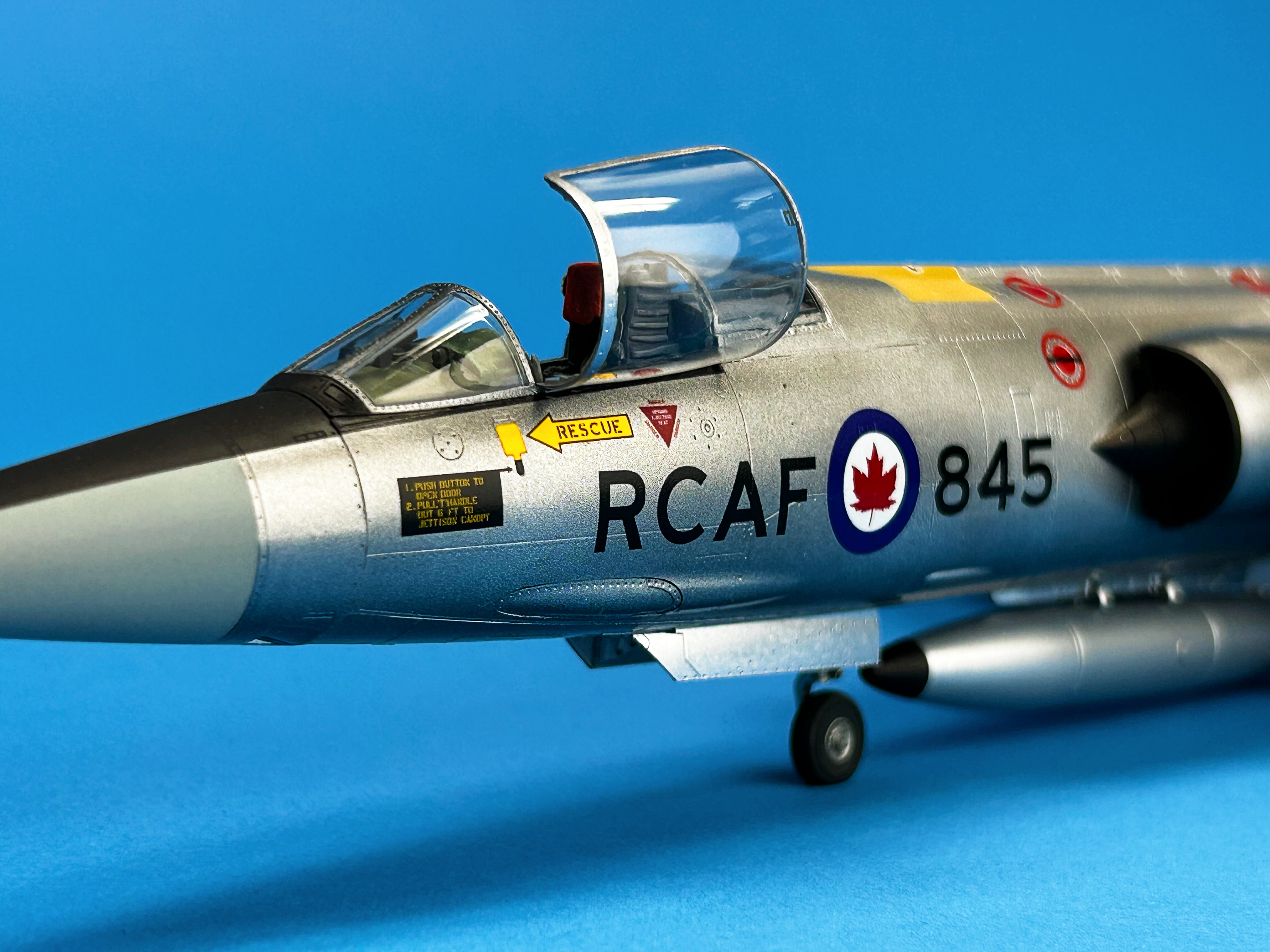
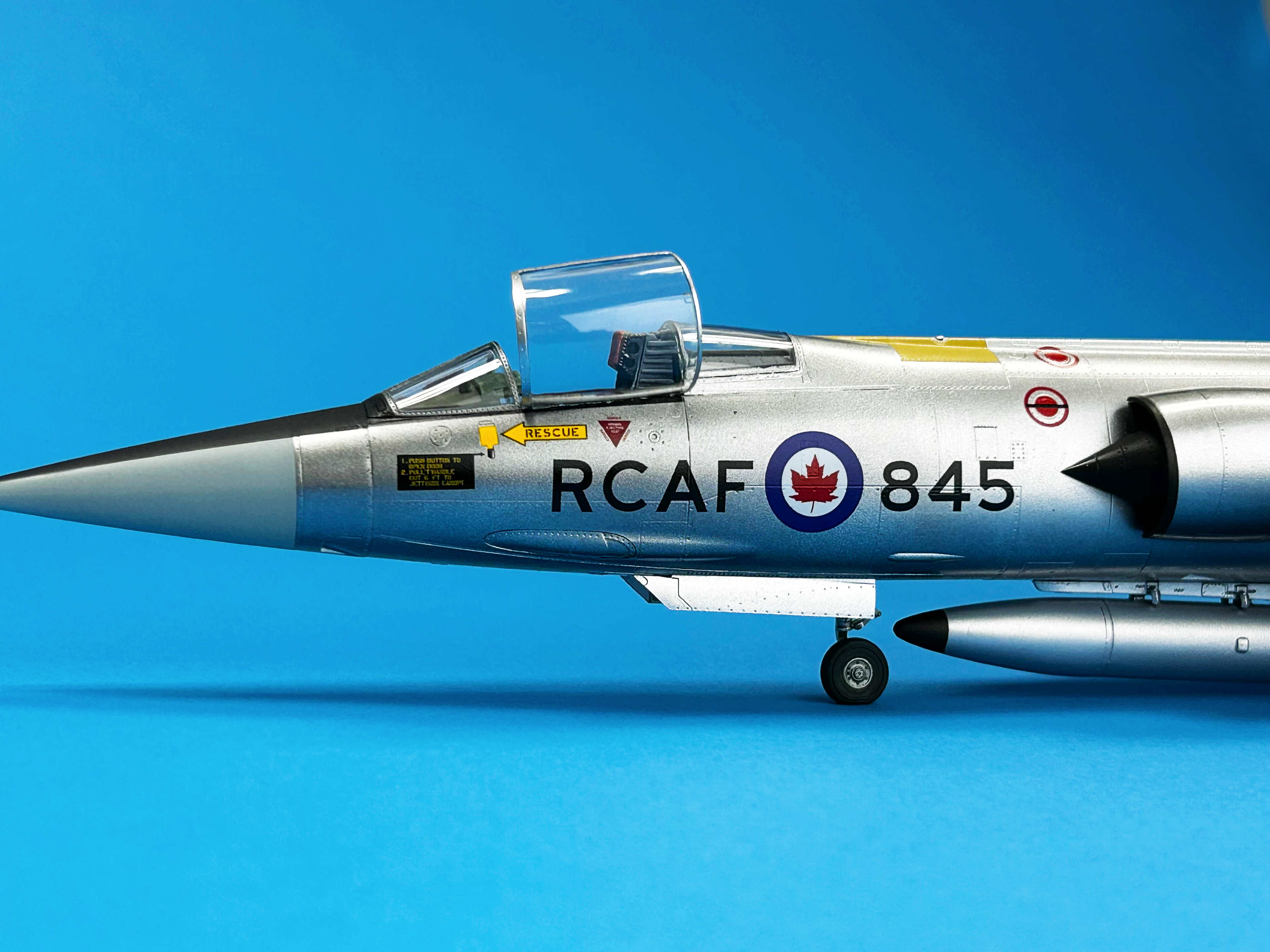
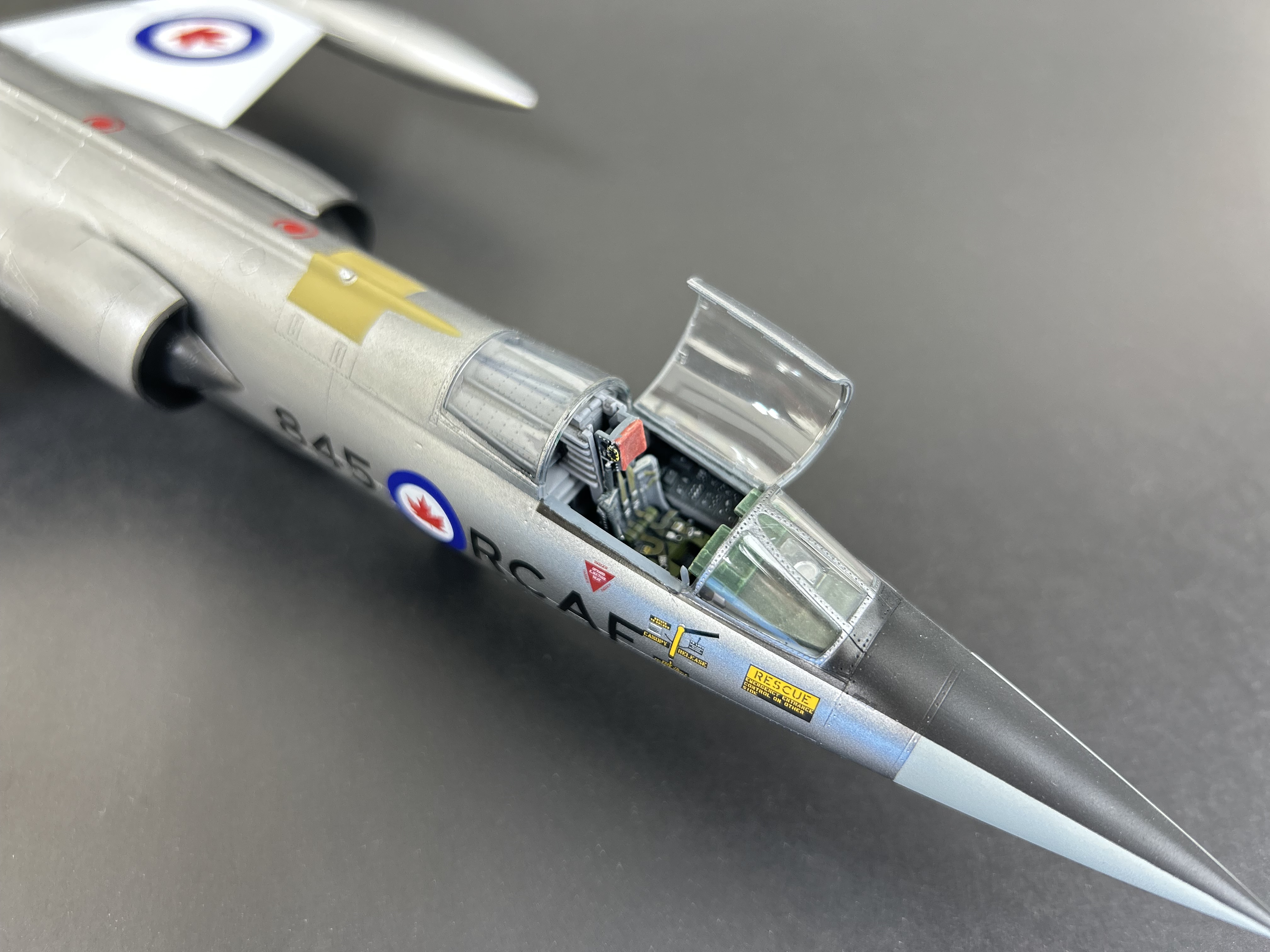
Wanna see a video of the build?
Yeah… yeah ya do!
Last Thing
Canada’s nuclear bomber is a concept from a time well before I came around. I can’t imagine such a thing being seriously discussed today. Then again, the world has completely changed some 70 years later. Or, hmm… on second thought, maybe it hasn’t.
This is the first Kinetic kit that I have built and I was impressed. The plastic was great. The use of Cartograph decals is fantastic. I really hope they always do that. I keep thinking that Kinetic might surprise us all with an all-new line of F-86 Sabres (Canadair and otherwise) but I think I will have to be patient for a while longer.
 MODEL AIRPLANE MAKER
Gem post.
LikeLiked by 1 person